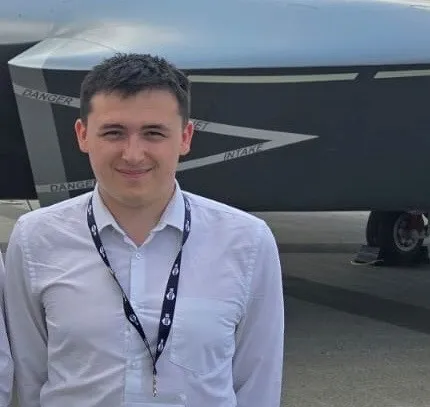
In the next in our series on the latest EW BrightSparks of 2025, we profile Harry Hale, a Systems Engineering Degree Apprentice at Leonardo. He is in the final year of an Electronic and Electrical Degree at the University of Hertfordshire.
Achievements
 During his time working in the industry Harry told us that he has faced a number of challenges and enjoyed overcoming them.
One of his greatest achievements, he shared, came at the start of his career. From scratch, he developed a Test GUI for his project. This was to aid product integration, testing and validation and was made using MATLAB.
“The process consisted of carrying out the ‘Systems Engineering V diagram’, from fabricating requirements, setting up validation criteria, designing and coding the GUI and finally verification and testing,” he told us. “This was a great achievement for me, as I was in the first few months of my career and to achieve a goal of this scale was something to be proud of.”
Another achievement was helping to lead a work package on a significant project. This consisted of carrying out effectiveness testing on a certain piece of technology his team had developed, collaborating with Leonardo colleagues supporting the work at the company’s Southampton and Edinburgh sites from his base at the Basildon site.
“I was responsible for communicating between all three sites, as well as organising the testing that was to be carried out. Travelling to Edinburgh to carry out and complete this work package was a great experience for a young engineer like me.”
But another proud achievement, he told us, was leading a team of seven to create a product to assist everyday living. Specifically, the ImechE Apprentice Automation Challenge is a competition where apprentices in different companies around the UK are tasked with creating a product which can automate an everyday process or problem.
“I volunteered to be team leader and led six other colleagues to create a product from start to finish. This began with concept generation and initial design, to all manner of documentation such as risk assessments, schematics and requirement modules. Once manufacturing and testing had been completed, there was a finals day in Coventry, where we presented our product to a panel of judges. Although we did not win the competition, I was incredibly proud of what we were able to achieve.”
As well as working on his leadership and teamwork skills throughout the project, he shared, he was proud they were able to create the product they had originally set out to build.
“Another useful aspect of the challenge was that we also went through the internal company review process to make sure it was up to company standards. This was a great opportunity as I was able to see first-hand how products are processed in the company.”
One of the biggest challenges he has faced, he told us, was having to present a unit production cost breakdown of his team’s product. Without any previous experience of doing this before, a significant level of detail had to be included.
As well as being a great experience, however, Harry also undertook additional research on how best to present such cost breakdowns. And he was proud that the whole process completed successfully.
Community engagement
In terms of STEM activity (i.e. blogging, mentoring, volunteering or STEM activity), Harry has been very active. Over his time at Leonardo he has made a significant contribution to community outreach.
For example, for a six-month period, he was one of the STEM leads at his local Leonardo site in Basildon. His role consisted of organising and participating in outreach events to schools and colleges around Essex.
Another time, he organised and participated in a speed networking event at a local school. This consisted of students moving round career stalls every 10 minutes and company personnel showing them what apprenticeship and graduate opportunities were offered. As well as contacting the school and arranging start times, he was creating risk assessments and gathering volunteers. He also helped at the event, making sure to engage with all students of all ages and interests.
Harry also participated in an ‘Apprenticeship Fayre’ at a local college, covering what apprenticeships Leonardo offers. And he was also involved with an industry night at the local Cub hut. This consisted of a presentation, an interactive game and a showcase of what products we make. With the challenge of the target audience for this outreach event being a lot younger than what he was used to.
Another event was an Electronics Workshop, for which he created a presentation and lesson plan. This activity would last two hours and be aimed at the 13–16-year-old demographic.
“I was responsible for fabricating an electronics presentation from scratch to explain certain aspects of electronic design. This included what components to use and why and everyday applications of electronics. This was then presented to a group of 20 as a STEM outreach activity, which went very successfully. The workshop is now being developed at a UK wide level rather than just Basildon, which I take pride in.”
Harry also expanded his outreach to not just local schools and colleges but also military applications. Last June, for example, he was part of the support team for ‘Family and Friends Day’ at RAF Waddington in Lincoln.
This consisted of travelling up to Lincoln for the event and running a company branded stall. At the event, he presented what life is like at a defence company and tried to inspire young people to take up Leonardo’s graduate and apprenticeship opportunities. It was an incredibly successful event with lots of brand exposure and interest, Harry told us.
And on Apprenticeship Week in February last year, he volunteered to film a clip for the Leonardo social media team, explaining his job role and what it is like to relocate to a new job.
Also, over his time in industry, Harry has been both a mentor and a mentee.
“As a mentee, I have two current mentors at work, my IET mentor and my industrial mentor. My IET mentor is someone who has been in the institution for many years and has helped give me advice on applying for chartership. Although I am at the early stage of my career, I am always looking to the future and my IET mentor has been a great source of knowledge for chartership questions. My business mentor is someone who has been helping me plan for promotion and professional development once I come off my apprenticeship scheme. This has taught me an incredible amount about the internal company processes and has helped me grow skill sets that I wouldn’t have thought of tackling.”
Harry himself has also been a mentor to a 1st year ImechE Apprentice Automation Challenge team. As he had completed the challenge last year, he felt well-placed to give first-hand experience to the new team participants. Basically, give them advice on what and what not to do. “It has been a great experience to see both sides of mentorship and I have gained valuable life skills doing it,” he shared.
Congratulations to Harry Hale!
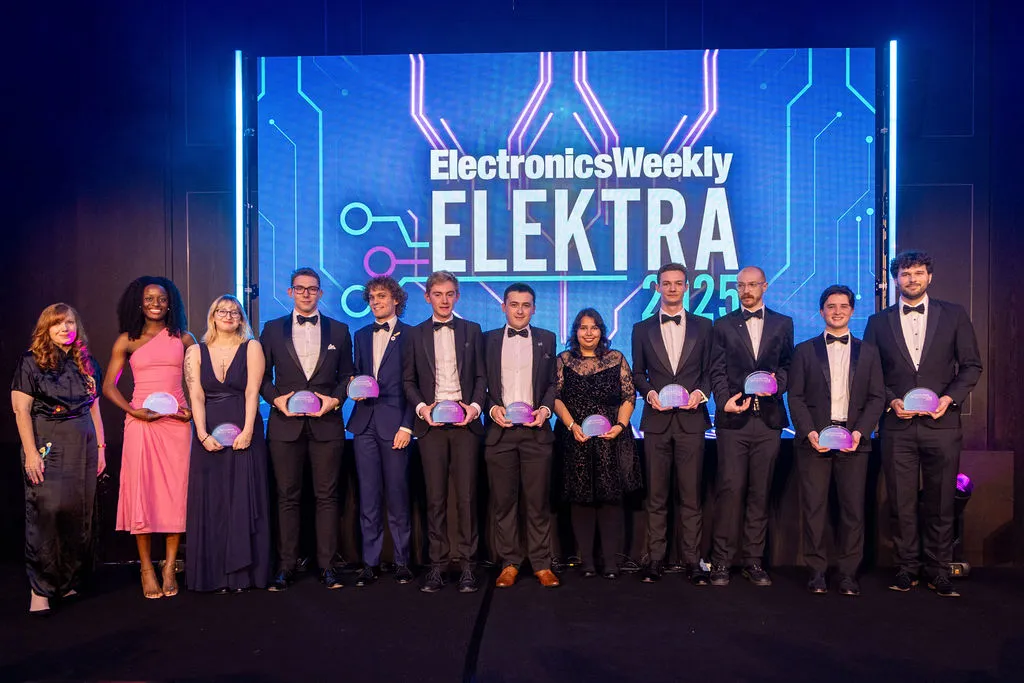
See also: Elektra Awards 2025 – The Winners