In the next in our EW BrightSparks of 2025 series, we profile Blake Davies, a senior hardware engineer at Imagination Technologies.
Achievements
 Nominated by a colleague, Blake was hailed for his work in GPU verification – specifically, to dramatically improve verification efficiency, reduce time-to-market and help eliminate critical bugs in GPU datapath components.
He is involved with formal verification (FV) at Imagination Technologies and works on verifying complex arithmetic hardware within the company’s GPUs. Indeed, his contributions are enabling broader adoption of FV across the company, we learnt, helping to set new benchmarks in hardware assurance.
Following a degree in pure mathematics at the University of Warwick, he sought a career where he could apply rigorous mathematics. This actually brought him to hardware engineering, and more specifically, to formal verification.
(An inspiration, apparently, was learning about the infamous and costly Intel floating-point division bug, which was missed by conventional simulation methods.)
We learnt that he has been combining FV tools with custom scripting and automation. This has made exhaustive proofs not only achievable for complex datapath modules, but also maintainable and scalable. Importantly, he achieved this without requiring deep tool expertise or detailed design knowledge. His work enables even junior engineers to successfully execute FV. This is “democratising its use across the business” his nominator told us.
“Formal proofs, while efficient in concept, often face real-world friction: steep learning curves, fragile environments, and high sensitivity to design optimisations. Blake tackled these by building generic, reusable verification frameworks that adapt dynamically to design changes — ensuring robustness without sacrificing accuracy.”
One of his biggest challenges came early in his career, we heard. Blake was thrust into a leadership role, handling complex datapath verification. Rising to the occasion, however, he accelerated his learning and independently solved high-impact technical issues. In fact, he emerged as a technical lead, eventually earning two promotions within just two years.
His work has fundamentally improved verification quality and efficiency, we learnt – specifically, a 50% reduction in verification time per module. And zero bug escapes in formally verified datapath modules since the automation was introduced.
He has also helped increase adoption of FV across the company’s GPU teams, thanks to reusable, simplified methodologies. And improved design flexibility has enabled designers to optimise for power, performance, and area (PPA) without increasing verification effort.
These practical improvements, we learnt, are helping the company deliver faster, more reliable silicon.
We heard that Blake is also a strong team player at Imagination. Having worked in multiple teams, he has not only earned the respect of his peers and managers, but honed his skills for communicating and engaging with others.
And looking ahead, Blake aims to solve the hardest FV problems with elegant, generalised solutions. Basically, making advanced verification more accessible to all engineers.
 Electronics industry viewpoint
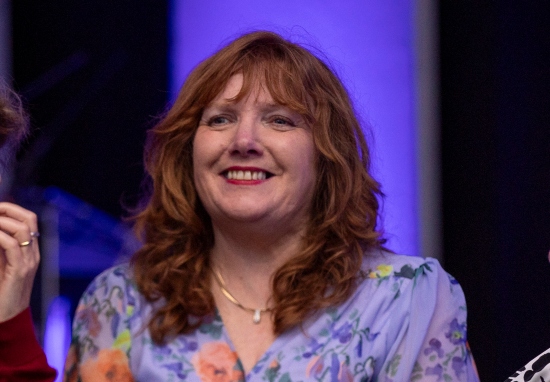
Caroline Hayes, editor of Electronics Weekly, also shared her viewpoint on Blake’s entry.
Caroline highlighted, for example, his impressive resume of advances in formal verification, which have resulted in demonstrable improvements in performance of GPUs.
“Blake is clearly a talented mathematician who is determined to push the boundaries of FV. He has also shown leadership in the workplace and constructive mentoring at university. The future of FV is in safe hands!”
Community
Through his role as a verification lead, Blake has taken an active part in supporting junior engineers. For example, he guides them through technically challenging problems whenever project demands required it.
Blake has found this mentorship to be a rewarding aspect of the role, we learnt. And it underscores his ability to communicate complex ideas clearly and support professional growth. He also actively participates in STEM outreach, making complex engineering ideas accessible to young learners and inspiring the next generation of engineers.
For example, during his time at university, he supervised weekly classes for a group of 10 first-year students, assisting them with assignments and foundational concepts. This teaching experience not only strengthened his own understanding, we heard, but also reflects a commitment to developing the next generation of engineers.
Blake is a member of the STEM Ambassador Community. This is a nationwide network of professionals dedicated to inspiring young people and supporting STEM education. The initiative brings fellow ambassadors across the UK together to share experiences, offer guidance and engage in outreach activities that bring STEM subjects to life. Blake’s involvement is another demonstration of his passion for nurturing emerging talent and contributes to a lively supportive engineering community.
Finally, he is committed to expanding FV adoption beyond the company. By presenting his work at technical conferences, we learnt he’s opening new avenues for collaboration and widely sharing tools and insights for others to build upon. Most recently, for example, he was selected to present at the Synopsys UK Technology Symposium in October last year.
Congratulations to Blake Davies!
See also: Elektra Awards 2025 – The Winners