Here, Farnell’s Regional Solutions Marketing Manager, Ankur Tomar, explains how Raspberry Pi bridges traditional embedded systems, industrial controllers, and modern Edge computing.
The Raspberry Pi revolution
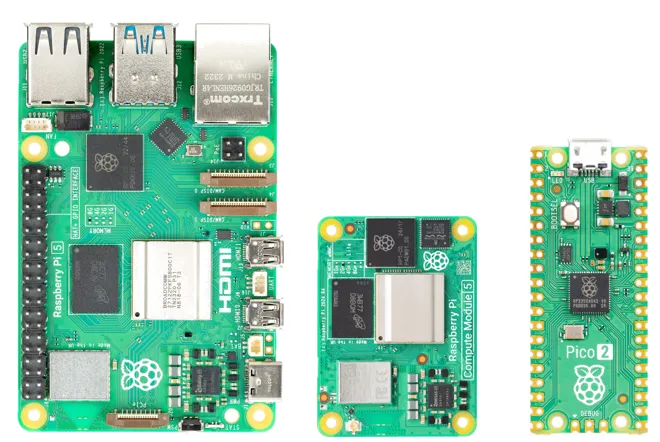
Initially designed as an affordable and accessible single board computer (SBC) for makers, hobbyists and students, Raspberry Pi’s flexibility has led to its adoption in demanding industrial environments. The product family has grown substantially to now include Raspberry Pi 5, Compute Modules, and the Pico series, offering tailored solutions for diverse design needs and which are ideal for Edge computing, sensor control, and motor management in industrial applications. There’s a board for every application. The Compute Modules (CM4, CM5) are System-on-Module (SOM) designs for large-volume production with custom hardware. The SBCs (Raspberry Pi 5 and earlier) offer full computing capabilities for automation, gateways, and HMIs etc, and the microcontrollers (Pico series) are ideal for lightweight embedded projects.
Industrial strength
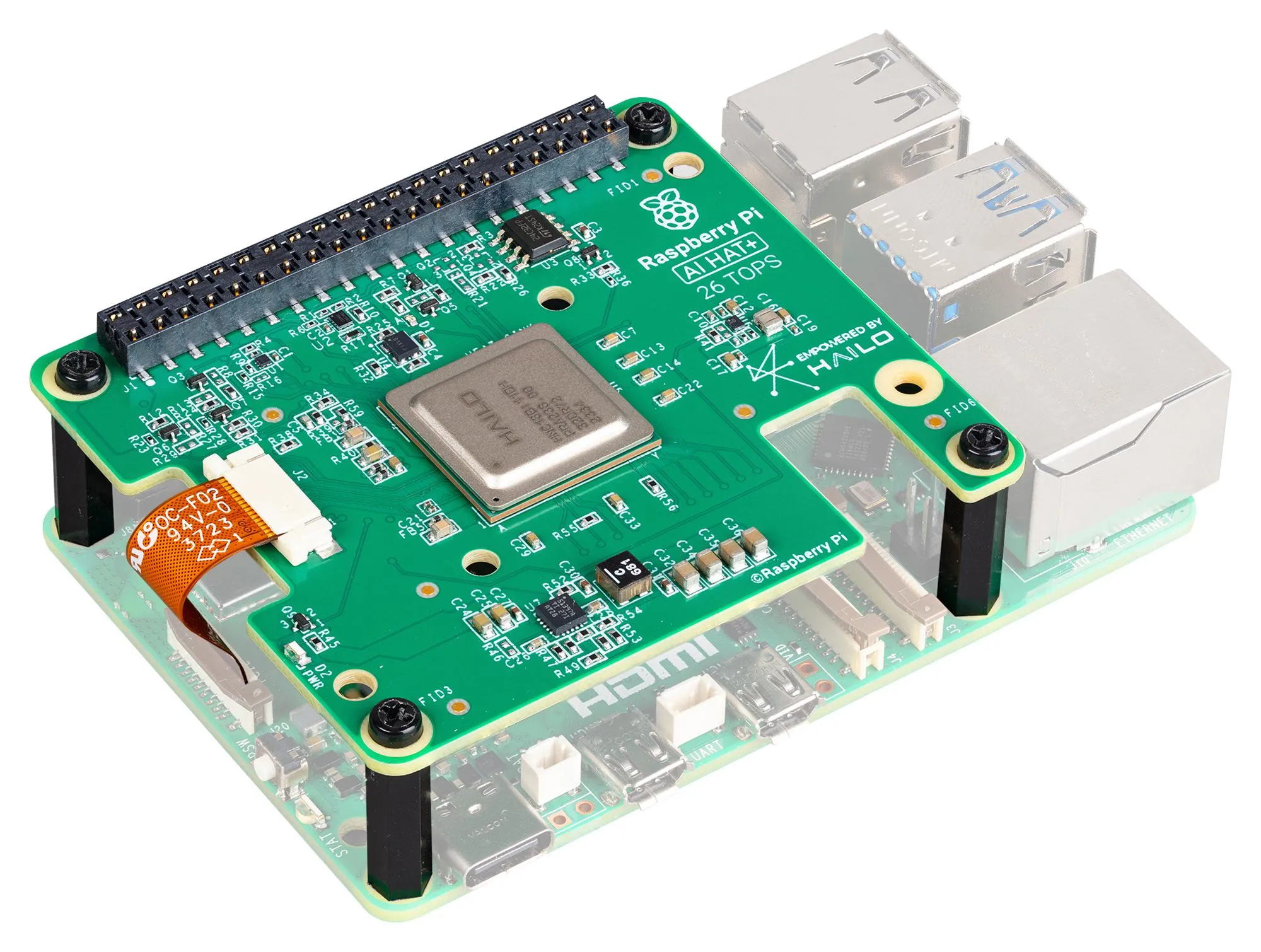
Industry 4.0 and the emerging Industry 5.0 principles need intelligent, distributed Edge computing and the technical advantages of Raspberry Pi make it an attractive option for industrial applications. Raspberry Pi boards feature multi-core ARM processors with low power consumption, PCIe connectivity, and hardware-accelerated video processing. Additionally, extensive I/O options (USB, HDMI, SPI, I²C, UART) plus Wi-Fi and Bluetooth connectivity options ensure flexibility. Accessories such as cameras, AI HATs, PoE modules, and industrial I/O extensions accelerate prototyping without custom hardware.
Integration into industrial systems is streamlined through software frameworks and accessories such as Docker, balena, Node-RED, and MQTT, while a rich accessory ecosystem supports rapid prototyping and deployment.
Unlike traditional PLCs with associated proprietary programming and costly licenses, Raspberry Pi supports multiple languages and operating environments, thus avoiding vendor lock-in. Its multi-core ARM processors enable AI inference, real-time control, and high-speed data processing. When paired with industrial enclosures and eMMC storage, Raspberry Pi offers reliable operation at lower cost.
Pi at the Edge of IoT
Raspberry Pi excels in Edge computing and IoT applications. It can connect to a wide range of sensors thanks to its support for RS-485, Modbus, CAN, Ethernet, and wireless interfaces. Additionally, local neural processing in real-time with add-on AI HATs and camera modules enables object detection, predictive maintenance, and quality control. Modules support advanced analytics and can easily run colour sorting, facial recognition, and other AI applications directly on the device, eliminating network delays and enabling real-time decision-making.
Long-term support
A key requirement of industrial systems is support for the future. Engineers require stability and longevity and that’s something provided by Raspberry Pi. The company guarantees a 10-year product lifecycle, which can be extended in some cases. This commitment ensures reliability for mission-critical applications and future-proof designs.
Real-world adoption
The use of Raspberry Pi in industrial applications is growing rapidly as the technology proves itself as reliable. Some of the applications it is ideal for include automated inspection, packaging verification, worker safety monitoring, digital signage and transportation displays. Modules are already powering flight information displays in airports, digital kiosks in retail, and Edge gateways in industrial automation as well as being use in energy management and security in smart buildings and environmental monitoring in agriculture.
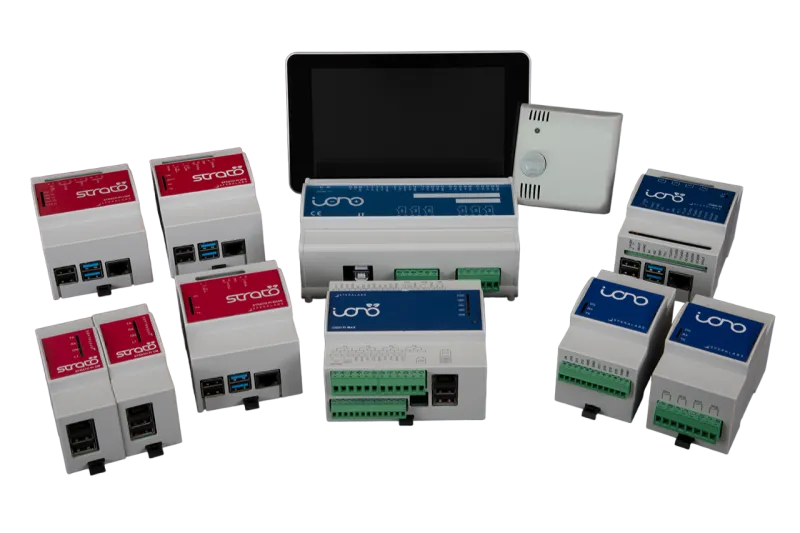
For example, at the heart of Sharp and NEC Large Format Displays is the MPi4 Kit which is powered by the Raspberry Pi CM4 module. In another application, Italian-based Sfera Labs primarily offers industrial automation servers, I/O modules, and sensors based on Raspberry Pi devices. The company has integrated the CM5 for several reasons, including performance and affordability, flexibility and scalability, reliability, and support, along with its ease of integration and full industrial compliance.
From its hobbyist roots, Raspberry Pi is now a high-performance industrial platform, that excels across a broad spectrum of Edge computing and industrial automation applications. Its combination of affordability, flexibility, and ecosystem support makes it an ideal choice for engineers seeking scalable, innovative solutions for Industry 4.0 and beyond.
About the Author:
Ankur Tomar, Regional Solutions Marketing Manager, Farnell
Web: Raspberry Pi for Industry | Farnell UK