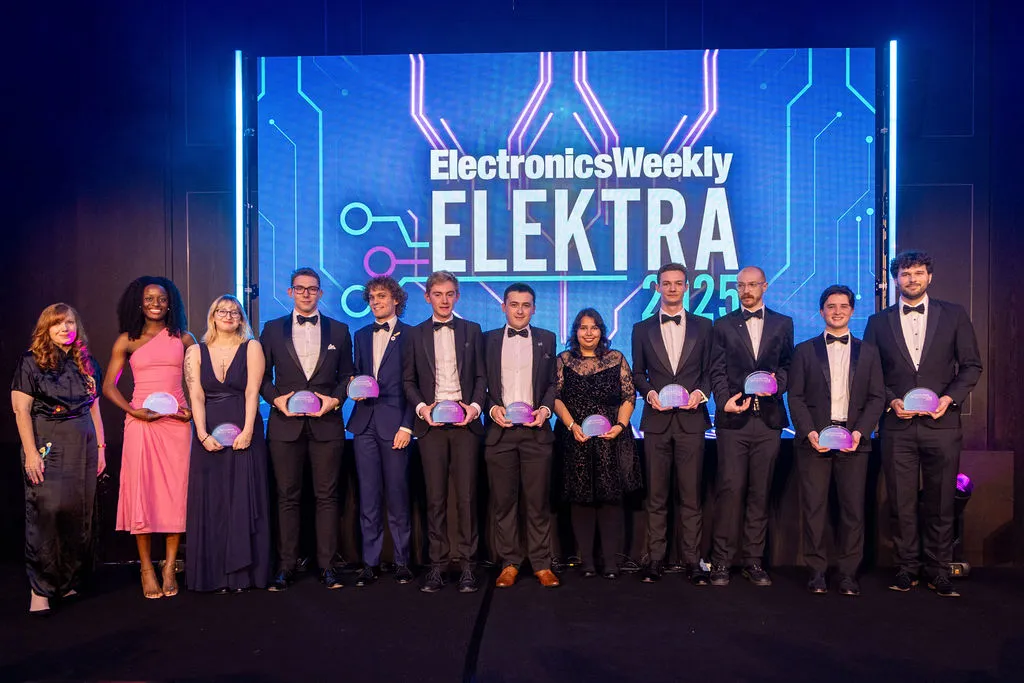
In the second in our series on the latest EW BrightSparks of 2025, we profile Nikolas Bruce, a PhD Research Student at University of Glasgow.
Achievements
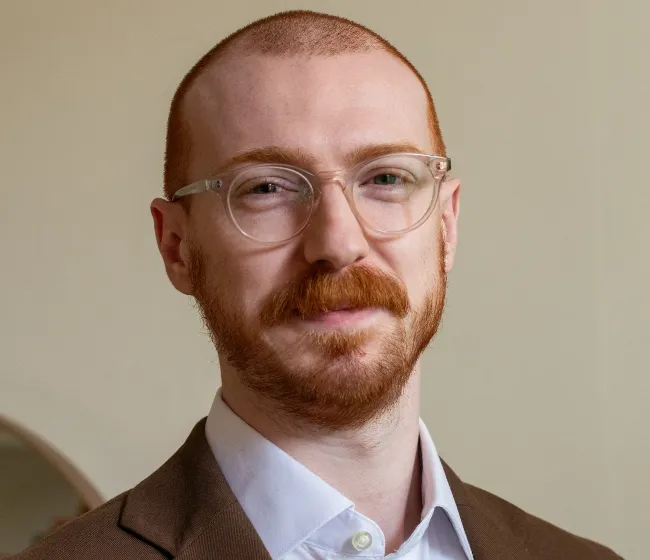 Nikolas was nominated by his supervisor who has known him since he was an undergraduate BEng project student in biomedical engineering. Beginning with work on an implantable antenna. He was described as being both hardworking and motivated, which lead to him pursuing a PhD.
“He consistently worked in our research lab over summer to extend his final-year project, leading to a peer-reviewed paper (as a co-author) at the IEEE Microwave in Biomedicine Conference. This was done alongside having a part-time job to support his studies.”
As a PhD student, Nikolas has technically excelled in his prize-winning work, we learned. And he has effectively been operating at the same level as post-doctoral researchers with several years of experience.
In under 18 months of research, for example, he has published two high-quality journal publications. And three conference proceedings papers (as author/co-author). In addition, he is a co-author of two journal publications currently under the nominator’s review. This is in collaboration with other research teams.
Nikolas has also been independently managing multiple collaborations in and outside the research lab at Glasgow. And we learned that he has been widely commended by colleagues from different research groups.
“He has been highly receptive to training and developed very diligent experimental skills in complex RF and microwave measurements, becoming a key collaborator in many ongoing projects, providing advice and support even to more senior researchers.”
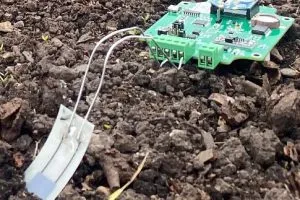
For example, he is one of two researchers who co-implemented a new system for RFID sensors but without the integrated circuit (IC) chips.
He designed inductive circuits, similar to wireless charging interfaces, which provide a multi-frequency response as their temperature changes. This was adopting materials designed by his colleagues.
Apparently, this chipless sensing system was published in the inter-disciplinary high-impact journal Advanced Science, featured as a journal cover. And then it was covered by over 30 news articles, ranking in the top 5% of research by media interest, across all Altmetric-tracked publications.
You can see an example of the coverage on hackster.io.
More recently, Nikolas has completed a project on developing new tissue/animal-free mobile phantoms for testing implantable wireless devices and antennas.
This was, accepted for publication in the peer-reviewed IEEE Antennas and Propagation magazine as a feature article, where he is the first-author of the study.
He worked across the material development, acquired and applied skills in RF and antenna measurements using a mix of instruments and setups (e.g. anechoic chambers, RF vector network analysers), and finally demonstrated the system with Bluetooth links.
“This approach enabled for the first time gel phantoms to be applied to a volunteer’s clothing, to emulate the implantation of wireless device, in a highly non-invasive way. As the first testing method which allows testing implantable wireless devices in the field, he is now collaborating with other research groups at the university who are using the setup in various biomedical applications.”
Nikolas most recently presented his work at the IET’s Colloquium on Antennas, Wireless and Electromagnetics (CAWE). This is leading to multiple new potential collaborations, we learned.
Finally, he is also contributing to an EPSRC-funded research project on wireless implantable devices for bladder cancer treatment using photodynamic therapy. This involves the use of light, wirelessly-powered, for targeted chemical drug delivery. Potentially, this could dramatically reduce side effects of traditional therapy.
For this, Nikolas designed the wireless power transfer circuits. He completed all electrical testing of the radio frequency (RF) powering. And the optical/electrical interface of the system.
This included the design and assembly of flexible PCBs with RF components and semiconductor characterisation. He was also experimenting with new materials for improved biocompatibility while maintaining the same electrical performance.
This work was part of the nomination winning the IET’s 1st Prize for Healthcare Technologies (Excellence and Innovation Awards).
“In summary, Nikolas has been an excellent, hardworking, and highly motivated researcher and electronic engineer. He is making significant contributions to multiple large research projects, simultaneously, which is impressive and unusual for a PhD student, especially under 18 months from starting their research career!”
Community
In terms of community work or STEM support, we learned that Nikolas has been very active. This is both in public engagement and outreach activities.
For example, he taken a leading role in organising events on behalf of Green Electronics Lab, the University of Glasgow’s research group. He has been part of multiple public exhibitions including the Glasgow Riverside Museum (a Science/Technology and Transport Museum), during the Glasgow Science Festival.
He has also been a part of three Explorathon/Researchers’ Night outreach fairs open to the public. These involved thousands of visitors at Glasgow’s Advanced Research Centre. And he led the organisation of the 2024 exhibition. All the way, from from the application stage and risk assessments to delivery on the day.
Nikolas has also helped deliver and improve new activities offered to school pupils during hands-on university experience week workshops.
His nominator explained further:
“For example, he helped train several demonstrators (Masters/PhD students) on delivering a new activity on DIY wireless chargers, as part of a workshop hosting pupils through the University’s Widening Participation team. Following this, he led the delivery of multiple of those workshops to over 100 pupils (15 to 17 years-old), many of which who came via the University’s Widening Participation team, from schools in under-represented regions in Glasgow.”
“He has also trained (and continues to train) multiple demonstrators on delivering such activities to pupils, further growing the STEM outreach community within the School of Engineering in Glasgow.”
Back in the classroom, Nikolas was also described as “a very active, hands-on, and keen demonstrator and teaching assistant”. This was as part of the Masters-level Microwave and mmWave Circuit Design course.
For example, we learned, he has been contributing as a demonstrator for two years now. And he has rapidly developed his teaching and communication skills, with the lab activities being highly rated by the students.
For more technical audiences, he has also delivered demos of functional RF systems in wireless power transfer. This was at the IET mmWave and THz Colloquium, in Glasgow.
The demonstrations – and also his delivery – attracted positive feedback from many attendees. Indeed, his nominator confirmed, they were remembered over one year later by some of the attendees!
“Combined with his technical excellence and hard work, Nikolas’s community engagement and outreach activities (to various audiences) make him a highly worthy nominee for the award, and a potentially outstanding future researcher/EEE!”
Congratulations to Nikolas Bruce!
See also: Elektra Awards 2025 – The Winners