As lightweight, AI-enabled eyewear gained traction, shipments of virtual reality (VR) and mixed reality (MR) headsets declined sharply, signaling a structural shift in how users engage with XR.
Extended reality (XR) refers to technologies that blend or extend physical and digital environments, including virtual reality (VR), augmented reality (AR), and mixed reality (MR).
The expansion of smart glasses availability—led by products such as Ray-Ban Meta AI glasses and competing devices—was the primary driver of XR market growth. At the same time, demand for bulkier VR and MR headsets narrowed, increasingly concentrated in gaming-centric use cases.
Meta maintained a dominant position in the smart glasses market with 72.2% market share, supported by its partnership with EssilorLuxottica. However, shipments of Meta’s Quest headset lineup declined 42.3% YoY.
Xiaomi ranked second with 4.2% share. XREAL had 2.3% share. ByteDance and Viture tied third at 1.5% share.
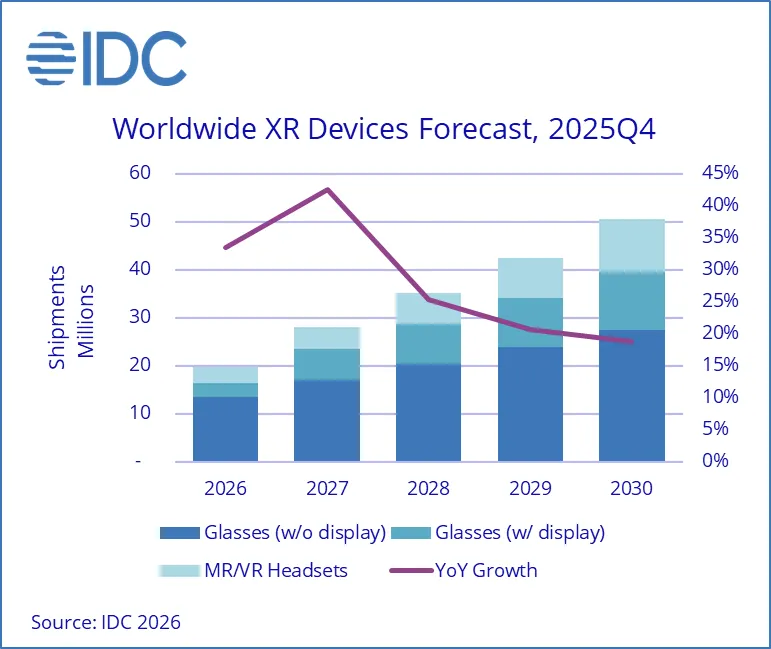
IDC forecasts 2026 market growth of 33.5% and a 2026–2030 CAGR of 26.5%
The XR market is transitioning from bulky headsets to lightweight smart glasses, as consumers increasingly prefer wearable, AI-enabled devices designed for everyday use. IDC expects 2026 to be a transition year, as the market continues shifting toward glasses-based form factors.
“New products from Google’s Android XR ecosystem, Snap, and a growing number of Chinese vendors will accelerate adoption by expanding smart glasses availability and familiarizing consumers with AI-first experiences,” said Jitesh Ubrani, research manager, IDC Worldwide Mobile Device Trackers.