Leveraging Toray’s proprietary polymer particle engineering technology, the new material enables both surface smoothness and impact strength in 3D-printed parts.
PBF-type 3D printing is widely adopted in industrial applications due to its ability to efficiently create parts with high dimensional accuracy and mechanical strength.
Conventional PA12 powders account for approximately 70% of feedstock in this polymer PBF market, owing to their good processability at relatively low temperatures.
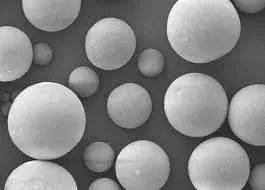
However, conventional PA12 powders typically consist of irregularly shaped particles, which hinder uniform packing and result in parts with rough surfaces that require post-processing such as polishing. In addition, gaps between particles tend to generate internal micro-voids, leading to reduced density and preventing the material from fully exhibiting its inherent mechanical properties, including impact strength.
Toray overcame these challenges by drawing on its proprietary spherical particle technology, backed by years of polyamide polymerization and resin processing R&D, as well as its experience supplying Toraypearl PA6, a highly heat-resistant spherical PA6 particle, for such 3D-printing applications as automotive components, office chairs, and power tools.
By applying this spherical particle technology to PA12, Toray successfully developed Toraypearl™ PA12, a new material compatible with a wide range of PBF-type 3D printing.
Compared with its conventional counterparts, the uniform spherical shape enables dense and homogeneous powder packing, resulting in:
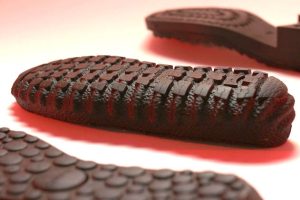
- Significantly improved surface smoothness(approximately 2.5× improvement, surface roughness (note 2) Ra ≈ 7 μm)
- Enhanced impact strength(more than 2× improvement, Charpy impact strength: 50 kJ/m2)
Toraypearl PA12 is expected to contribute to higherquality 3D-printed parts in applications requiring durability, airtightness, and mechanical reliability, thereby expanding its potential use in both prototypes and functional parts.
Sample evaluations with selected customers have been underway since January 2026.