Analyst IDC says that if it lasts only a few weeks, it will have a “modest” impact, although inflation across key areas is already visible. But if the conflict drags on, it could worsen component crunches and reignite issues over access to rare earth elements (REEs).
Right now, petrochemical feedstock prices are rising as crude prices surge – up around 8 per cent after the first strikes – lifting input costs across the plastics sector, including those for components and assemblies (e.g., insulators, laminates, enclosures). Market prices had been softening.
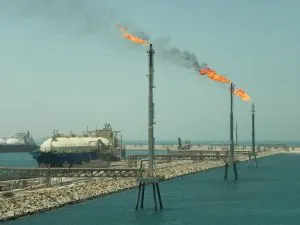
Next, spot prices for liquefied natural gas have leapt by up to 50 per cent following closure of Qatar’s Ras Laffan megaterminal. Used to manage demand spikes at factories and data centres, British customers remain exposed though most of their LNG comes from the US.
Third, freight lead times on seaborne commodity components and manufacturing equipment remain extended because shippers will not use the Suez Canal.
The war has effectively obviated a 2025 US-Houthi Red Sea ceasefire. Insurers are repricing or cancelling war risk coverage. Carriers are sticking with longer voyages around Africa.
IDC sees things getting trickier if the conflict drags beyond three or even six months. Risks include existing challenges persisting to fuel corporate and consumer inflation and, potentially, rises in interest rates.
But there are other threats.
The speed with which the US and its allies are exhausting ordnance could exacerbate component shortages. Greatest fear surrounds the missile interceptors used to counter Iranian drone attacks. They need rad-hardened, high-reliability memory and dedicated FPGAs/processors for guidance computers. Capacity for these devices is sold out at specialist fabs. Elsewhere, allocation battles have become a common feature of 2026 because of the data-centre buildout.
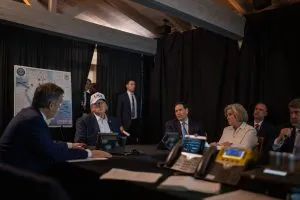
US Secretary of State Marco Rubio is concerned. “[The Iranians] are producing, by some estimates, over 100 of these missiles a month. Compare that to the six or seven interceptors that can be built a month,” he said on Monday (March 2).
The administration could pre-empt domestic production – notably at Intel Foundry and Micron – using the US Defence Production Act. It then has leverage through Chips & Science Act subsidies over Samsung and SK Hynix for memory and TSMC for processors.
There is then a sensitive geopolitical strand that draws ongoing tensions between the US and China into play.
Like its neighbours, Iran wants to diversify beyond oil. One target market has been critical raw materials, including REEs.
The regime opened a pilot monazite processing plant last April at the Abbas Abad Industrial Town in Yazd province. Monazite is a feedstock used to derive oxides of cerium, lanthanum, neodymium, praseodymium, yttrium and other REEs that have electronics applications.
The separation process generates thorium as low-level radioactive waste. This handling challenge has been dominated by Chinese processors, though University of Tehran researchers have developed independent separation techniques.
Currently known REE deposits around Yazd are, at first glance, modest at 125m tonnes compared to those in the US’ better-known objective, Greenland. However, the 7,000 square kilometre region has not been systematically explored.
The Financial Times reported that Iran’s negotiators discussed minerals with the US just before the attacks (much as Venezuela discussed oil before the capture of Nicolas Maduro). But as one of the Islamic Republic’s few allies, China expected to be the lead partner at Abbas Abad – REEs are a counterbalance for Beijing to US silicon leadership.
Presidents Donald Trump and Xi Jinping are set to meet in the next few weeks.
Meanwhile, Polish EMS group Tstronic has perhaps captured the mood: “Global political risk (wars, tariffs) encourages abandoning strict just-in-time in favour of a just-in-case strategy.”