“For a small company, entering the chipmaking materials business is as risky as robbing a bank: you either succeed or you don’t survive,” says Chan Wen-Hsiunh, chairman of Advanced Echem Materials, which survived the process, “failure likely means the collapse of the company. You have to start expanding production capacity at the same time you submit samples to potential clients, so that once you pass qualification, you can begin deliveries. But if you fail the verification process, you’re finished.”
“Our team submitted samples to a leading chipmaker for an entire year without receiving any feedback, and at one point, my engineering team almost wanted to give up,” said Chan, “I told them that as long as our potential client didn’t tell us to stop, we should keep sending samples.”
The company’s products are now being used in TSMC’s 2nm process.
“We worked on the chip packaging machines, such as the key die bonder, for almost 10 years before it got recognised and adopted by one of our top customers,” says Frank Liang, general manager of C Sun. “I still remember the team working on advanced chip packaging machines received such bad internal reviews almost every year, but fortunately we did not give up and continued the efforts. Now that product line has become our most important source of revenue growth and has helped transform the company.”
Semiconductor revenues now account for half the company’s income.
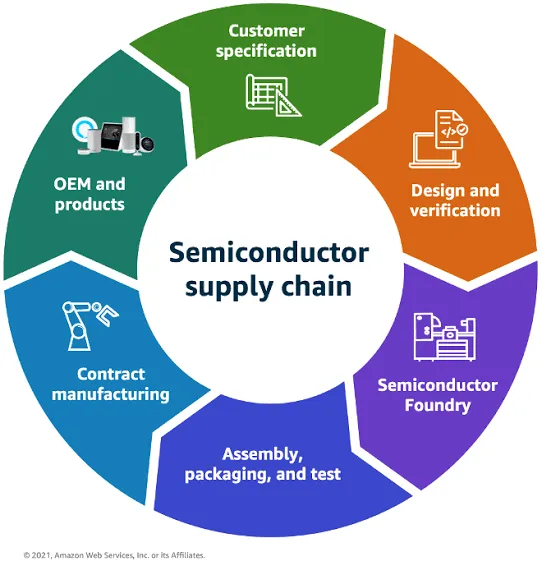
“If you want to supply the world’s top chipmakers, certain capabilities must be built in from the start,” says Sunlit Chemical vp Lily Tsai, “you need advanced analytical capabilities to fully understand every detail and data point of your chemicals. You also need in-house packaging, logistics and warehousing capabilities to safely handle and store hazardous materials. It’s not just about making the chemicals themselves – the entire value chain and supporting services must meet the highest standards.”
Sunlit has built its own fleet of chemical tanker trucks and in-house chemical packaging capabilities. “Production traceability is very important,” adds Tsai, “If any of our chemicals encounter quality issues, we need to know exactly where the problem originated.”
At another diversification success story, IV Technologies, general manager Yang Wei-Wen, says: “When we go overseas and say that we offer polishing pads for chipmakers, we often get surprised reactions — people say it’s been nearly 20 years with no second vendor working on this.” The area has been dominated by DuPont.
“There are two perspectives to enlarging and enhancing the supply chain,” says TSMC svp Cliff Hou, “one is to develop larger and more capable local suppliers, and the other is to attract greater investment from foreign suppliers. Both are important. In advanced chip packaging equipment, we are already seeing strong progress from emerging local vendors. The next step is to cultivate more materials suppliers.”