
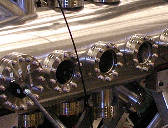
EUV lithography at 13.5nm is one of the techniques proposed to continue ‘Moore’s Law’ below 10nm, replacing 193nm light laser light.
However, EUV sources are exotic – one, for example, involved shooting drips of molten tin with a laser – and are struggling to produce enough power.
“In order to get smaller feature sizes on silicon, the industry has to go to shorter wavelength light,” said Professor Uri Shumlak. “We’re able to produce that light with enough power that it can be used to manufacture microchips.”
The University has spun out a company called Zplasma, saying: “Light produced through techniques now being considered by the chip industry generate a spark that lasts just 20 to 50ns. Zplasma’s light beam lasts 20 to 50µs.”
“That translates directly into more light output, more power depositing on the wafer, such that you can move it through in some reasonable amount of time,” Shumlak said, without revealing power figures.
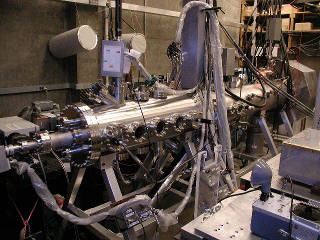
The key to EUV generation is a hot plasma.
Zplasma’s source is said to be like a fusion reactor: “a lower-cost version of a fusion reactor that uses currents flowing through the material, rather than giant magnets, to contain the million-degree plasma,” said the University.