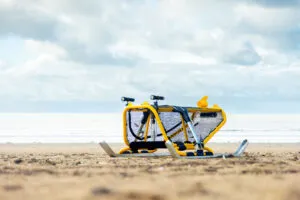
The distributor supplied components for the prototype underwater harvester, which collects seagrass seed 100-times faster than manual harvesting. The seeds are then grown and replanted to restore the seagrass stocks.
Seagrass naturally protects coastlines from erosion by stabilising ocean sediments and reducing wave energy. It also filters pollutants and excess nutrients to improve the water quality. They also store carbon up to 35-times more efficiently than rain forests as well as being the natural habitat for many fish and invertebrates used by local fisheries.
The levels of seagrass around the UK shores are declining, however. They have reduced by 44% since 1936, which is where Project Seagrass comes in. It aims to collect seagrass seeds for large-scale seagrass restoration worldwide.
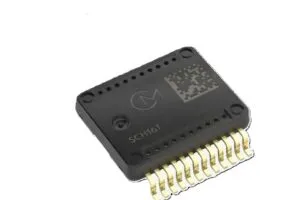
Mouser supplied the Eval-ADXL362 evaluation board by Analog Devices, the Espressif Systems ESP32-S3-WROOM-1/1U wireless model, a LSM6DSOTR six-axis inertial measurement unit (IMU) by STMicroelectronics and connectors from JST and Hirose Electronics to operate the underwater harvester and its sensing and data processing functions.
Tandem Ventures is a group of designers and engineers who bring together brands to “design helpful inventions for good causes”. The final project is donated to the good cause, in this case the marine conservation for seagrass meadows, Project Seagrass. Tandem Ventures has co-ordinated similar projects, including Mission Humpback, which used drone-mounted lidar units to measure humpback whales around Iceland to monitor their health.
“We are very proud to be part of this endeavour, supporting the restoration of ‘underwater rainforest’ environments. It’s exciting to see technology helping conservation in such a tangible way,” commented Mark Patrick, Mouser’s director of technical content. He added that the company “strives to demonstrate how innovation can accelerate ecological restoration without compromising scientific integrity or operational safety”.