The company’s designless mission aims to replicate the 1980s coining of the term fabless for companies which only did design not fabbing.
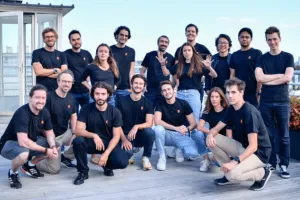
The company’s founders Anna Goldie and Azalia Mirhoseini (pictured) previously designed chips for Google and reckon they have streamlined the design process so effectively that companies need never again design their own chips in-house.

Ricursive Intelligence is building a platform that uses AI to accelerate and optimise every stage of the semiconductor design process, creating a recursive feedback loop: AI models design the next generation of chips and those chips, in turn, train more advanced AI models.
This tight, continuous feedback accelerates both hardware and AI capabilities, creating the compute foundation that future frontier systems and artificial superintelligence will require.
“Chips are the fuel for progress in AI, and the multi-year chip design process is holding back the field,” says CEO Goldie, “at Ricursive Intelligence, we’re using AI to revolutionise chip design, developing superior hardware in a fraction of the time. By closing the loop between AI and hardware, we can accelerate progress toward artificial superintelligence and enable a Cambrian explosion of custom silicon.”
“AI’s biggest breakthroughs have emerged through scale, made possible by advances in chip design,” says CTO Mirhoseini, “we’re using AI to accelerate AI, creating a feedback loop where our models design the next generation of AI chips, which in turn enables more capable AI models. This recursive improvement cycle will create the hardware needed to support increasingly capable AI systems, ultimately paving the way for the silicon substrate that superintelligence will require.”
“Ricursive Intelligence is positioned to be the leading frontier lab applying AI to transform the chip design process,” said Stephanie Zhan, Partner at Sequoia Capital. “As the industry pushes toward AI transforming the chip design process, we will not only accelerate timelines to design new chips, but even more importantly, we will also unlock new creative chip designs that will massively accelerate the field of AI in its entirety.”