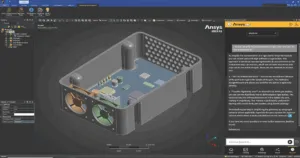
The 2025 R2 suite includes the Engineering Copilot (pictured) in existing products (AnsysGPT, powered by Azure OpenAI, Ansys Mechanical, Discovery, Fluent, HFSS, Electronics Desktop (AEDT), Scade One, Speos, Maxwell, optiSLang and Lumerical). In each, the virtual AI assistant allows access to the company’s simulation expertise, learning resources, and AI-powered support with a single click, via the Ansys user interface.
The company claims that results are x17 faster for radiation pattern calculations and, in the case of HFSS, more precise phased array antenna beam steering simulations to benefit 5G/6G, radar sensors and satellite communications projects.
The suite also includes seven products with AI+, Ansys‘ AI functionality for simulation, including the new Ansys Missions AI+ ODTK tool for orbital accuracy.
This edition also integrates optiSLang and SimAI to accelerate dataset creation and AI training. Improved data handling and automation benefits efficiencies and enables teams to create streamlined, scalable workforce, noted Ansys.
This new edition also includes expanded Python compatibility to allow engineers to customise automation. The 40+ Python libraries now include PySTK and PyChemkin to automate workflows.
Threat analysis and vulnerability management can be automated using the new web-based Ansys medini Cybersecurity SE tool.
Ansys is now part of Synopsys.