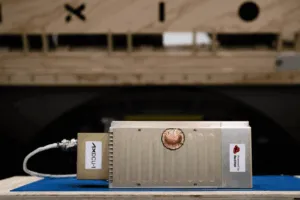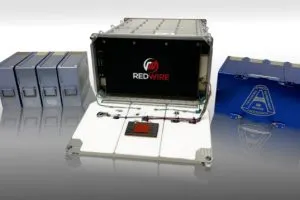
The 15 experiments range across medicine production, crystal growth, space-based cloud computing, electric propulsion for spacecraft and LCD technology.
Germicidal
For example, one experiment will examine how germicidal ultraviolet light delivered through optical fibres could inhibit the formation of harmful biofilms in water systems.
The project involves the Arizona State University in collaboration with BioServe Space Technologies. Funded by the US National Science Foundation, it aims to provide a more cost-effective alternative to traditional disinfectants.
Potentially, results could be used to protect life support systems on spacecraft during long-duration missions, says the ISS National Lab. It could also be used for drinking water systems on Earth where water purification infrastructure is not available.
Capture Bag
Another experiment, from TransAstra Corporation, involves an inflatable Capture Bag system. Potentially, it is a simpler, more affordable solution to space debris collection.
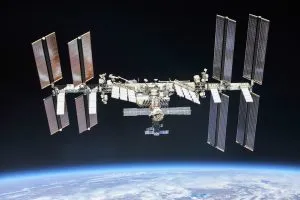
The experiment will be using Voyager Space’s Bishop Airlock to test the deployments. This was the first permanent commercial addition to the International Space Station.
CASIS
The ISS was designated as a US National Laboratory in 2005 by Congress. It is responsible for managing all non-Nasa research. It officially enables space research and development access to commercial, academic and government users.
Since 2011, the Center for the Advancement of Science in Space (CASIS) manages the lab under a co-operative agreement with Nasa.
Commercial resupply
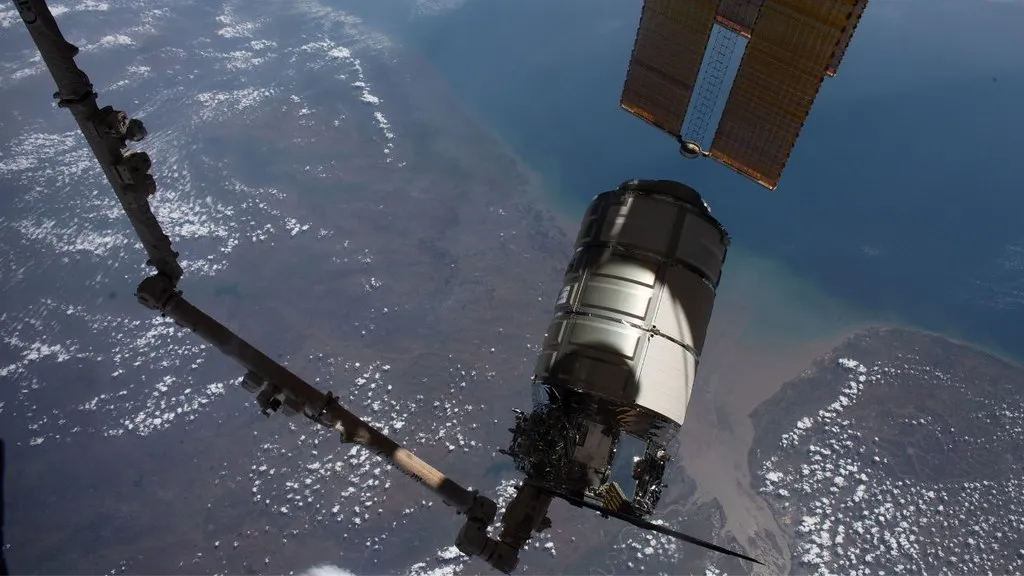
The Commercial Resupply Services 23 (NG-23) mission launched on 14 September from Cape Canaveral Space Force Station. It arrived at the ISS on 18 September, being captured by the Canadarm2 robotic arm for attachment to the space station.
In total, it delivered 11,000 pounds of supplies and science experiments aboard the Cygnus XL spacecraft. This is named the SS Willie Mcool, and is the first flight for the larger Cygnus XL variant.
The Northrop Grumman mission launched on a SpaceX Falcon 9 rocket.
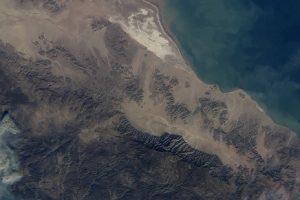
Image: Nasa – a Cygnus space freighter from Northrop Grumman is pictured in the grips of the Canadarm2 robotic arm as the International Space Station orbited 258 miles above the Arabian Sea coast of India
See also: ISS National Lab report outlines scope of research in space