
Space missions today must satisfy constantly increasing expectations for higher volume and quality data to inform activities such as climate studies, weather forecasting, geospatial mapping and disaster mitigation. There is also growing interest in missions into deeper space that could hold the keys to the longer-term future of humankind and an even greater understanding of the wider universe.
Generally, today’s space vehicles are carrying higher performing systems, for example, remote-sensing satellites capturing photographs and video at ever-increasing resolution and with faster frame rates, or sampling greater numbers of multi-spectral and hyper spectral imaging channels. While the development of sensing applications has kept pace with the growing appetite for data generally, data downlink bandwidths have not. Bigger datasets imply lengthening exchanges with ground control stations. There is simply not enough time for this when the decisions that result from analysing the data are needed more quickly and sometimes even in real time.
To mitigate the challenges of slow data downlink bandwidths, more of the massive number crunching is moving into space systems, but this demands more powerful on-board computing payloads. This raises the demand for energy and power, but also increases payload weight: which must all be carefully managed when designing satellites and space vehicles.
On-board AI engines
On-board artificial intelligence (AI) compute engines in space-grade chips can address this, permitting computationally efficient and low power, local inferencing to filter the sensor data and offload the downlink.
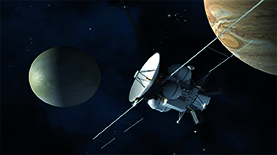
The ability to autonomously make decisions in space can be mission-enhancing, and in some cases, mission-enabling. For example, earth observation satellites are beginning to use AI to detect the presence of clouds in captured visual images. If surface detail is obscured by cloud then the image may be rendered useless, in which case it can be discarded and not consume storage memory or downlink bandwidth.
In security applications, where objects on the earth’s surface need to be identified in real time, object recognition AI can quickly differentiate between commercial ships and military naval vessels, for example, to accelerate response time and eliminate long human-in-the-loop analysis cycles.
In spacecraft that are designed to land on planets or asteroids, the communications lag time precludes remote control of the landing operation from earth. On-board AI lets the vehicle detect viable landing sites autonomously in real time.
There is emerging interest in using AI technology to monitor the overall health of the systems onboard satellites and spacecraft by detecting anomalies in measured parameters such as currents, voltages, temperature, mechanical strain and vibration. This can allow real-time fault detection and early warning, negating the need for human-in-the-loop analysis cycles, which can take days or weeks. Given that a complex modern satellite may have several thousand telemetry channels, AI enables real-time analysis of all channels, whereas only a subset of telemetry channels may be available for human analysis on the ground.
Life in space
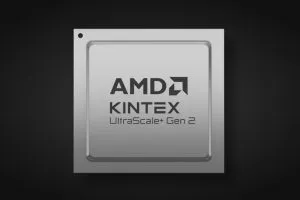
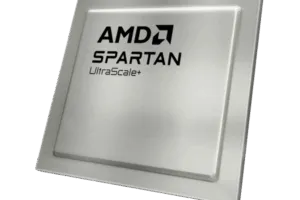
As this genre of AI, space AI, becomes more pervasive, the industry requires cost-effective solutions for hosting inference workloads. There are various ways of implementing AI inferencing in embedded systems. A commonplace approach is to use dedicated DSP resources that are often integrated in compute devices such as FPGAs, GPUs, TPUs and specialised asics. Devices such as AMD’s Versal AI Core adaptive SoCs with integrated AI engines, for example, are designed to implement the multiply-accumulate operations required by neural networks much more efficiently.
The challenges of preparing systems for a life in space never go away. Space systems are expensive and once launched cannot be repaired, therefore quality and reliability assurance are critical.
It is well known that space presents a very harsh radiation environment to microelectronics, and commercial parts can experience sudden destructive radiation effects (single event latch-up effects) as well as the gradual deterioration of performance and leakage current (total ionising dose effects).
The AMD Class B qualification and manufacturing test flow is based on the US Department of Defense MIL-PRF-38535 Class B specification for qualification and testing of monolithic integrated circuits. The qualification has been adapted for the advanced organic packaging required by space-grade devices, supplementing the vast amount of quality and reliability information that has already been gathered on these parts in extreme temperature environments.
Devices are also characterised for radiation effects with a variety of tests exposing them to protons, heavy ions, and gamma radiation. This protects the continuity of space systems using these devices and enables the organisations deploying them to reprogramme hardware after deployment and conduct necessary over-the-air updates.
Finally, longevity is an issue. Satellite manufacturers need support on products sometimes years after launch, by which time many commercial microelectronic components have reached obsolescence and discontinuation. This can be countered with the use of devices tested and characterised for radiation effects together with production and support of space-grade components continuing for many years after introduction.
Mission acceleration
While the capabilities of satellite and spacecraft sensors have been increasing dramatically, downlink bandwidth has not been increasing as quickly. AI is a viable way to reduce the demand for limited downlink bandwidth while allowing much faster – in some cases real-time – decision making using the data acquired by the satellite sensors. It can be implemented efficiently in adaptive SoCs that provide dedicated adaptive AI engines.