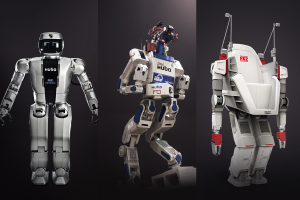

The adoption of robotics in factories has reached a record of 162 units per 10,000 employees, according to the World Robotics 2024 report.
Today’s hyper-connected robots are demanding. They require much more than the traditional industrial control systems used in factory automation. In 2025 the ability of robots to install parts down to the millimetre and detect defects in real time hinges on precision timing.
The time-sensitive networks that support robotics require a new level of accuracy and synchronisation. This is being made possible by the highly stable reference frequencies provided by the latest microelectromechanical system (MEMS) oscillators.
Traditionally, programmable logic controllers and industrial control systems have enabled sequential processes. Now, more exact synchronisation is needed to speed up production and cut out errors.
Precision Time Protocol is an agreed default behaviour designed to make systems simple to be installed and operated. For the required level of co-ordination between machines and systems on the factory floor, time-sensitive networking, supported by this protocol, can synchronise clocks across networks to within a sub-microsecond.
The result is a raft of new possibilities in robotics applications from sensor solutions
to autonomous mobile robots and collaborative robots (cobots) designed to work alongside humans in material handling, assembly and finishing.
Harsh environments
In order to guarantee timing accuracy at any given time in manufacturing facilities durability is needed. One of the advantages of silicon MEMS devices over traditional quartz crystal oscillators is their ability to stand up to environmental stressors such as shock and vibration. Quartz devices are more sensitive to the mechanical g-forces present in factories, making them more likely to sustain damage and falter.
Temperature is also a significant consideration. MEMS-based devices are able to avoid frequency drift in the midst of extreme temperature fluctuations. This has proven important not only in a large number of industrial automation applications, but also in aerospace and defence applications.
AI’s quality control
Artificial intelligence (AI) has reduced the time and training needed for quality control in many industrial processes. Smart machine vision uses AI-powered image processing to learn what is needed for automated defect detection. Using 3D and multi spectral cameras, automated defect sorting systems are identifying both surface and structural faults in products.
AI and automation
The next productivity frontier report by McKinsey forecasts that AI factories have the potential to automate tasks that absorb 60-70% of the human workload. McKinsey has increased this estimate from a previous prediction that technologies could automate half of employees’ work, based on the recent acceleration of technical automation’s potential.
Precision timing devices are the lynchpin of this automation, providing synchronisation of high-speed cameras with processing systems, resulting in precise image capture and accurate analysis. The ability of MEMS-based devices to minimise latency improves inspection accuracy for production efficiency.
Industrial IoT
Along with AI, arguably the most important form of automation in what is billed as the ‘fourth industrial revolution’ is the IoT. Smart sensors can track multiple parameters – from temperature to energy consumption and pressure – detecting any irregularities and helping to reduce the risk of equipment failure.
To be effective, industrial IoT sensors need to be synchronised with the edge computing systems that process data on-site, and the cloud systems that enable remote monitoring and perform predictive analysis. It is precision timing that provides this synchronisation, supporting real-time data processing and the reliable detection of abnormalities.
In the same way, the latest MEMS-based timing technology helps to timestamp errors precisely. This permits a deeper understanding of when and where the mistakes that lead to defective products were made.
Successfully co-ordinating the variety of robotics applications within manufacturing environments is vital to achieving accuracy and speed.
The activities of robotic arms, automated guided vehicles and cobots must be synchronised for task execution to work in optimised sequences. Again, precision timing acts as the backbone as a key co-ordinator that minimises latency and optimises each task across the varied robotic tools on the factory floor.
Functional safety
MEMS-based timed timing devices can provide functional safety. This element of precision timing is an advantage in factories where there is interaction between robots and humans.
Essentially, human-facing robots, such as cobots, must have a reliable clocking system that can self-detect failures, reacting in a predictable way when something happens that wasn’t supposed to. Precision timing enables the functional safety that is essential for this kind of system.
Advanced safety integrations developed for the automotive industry, employed by safety-critical electronics in autonomous driving or advanced driver assistance systems, exemplify precision timing’s importance to functional safety in robotics.
The future of factory automation
As factory automation becomes more complex, driven by technologies such as AI, industrial IoT and 5G connectivity, tight synchronisation and a unified time reference become ever more important. System components, including timing devices, also need to address the need to operate efficiently in harsh environments with extreme temperatures, vibration and shock.
MEMS-based timing solutions are at the very forefront of robotics and broaden the potential of applications such as AI detection and real-time monitoring.
Options for industrial timing
The Chorus automotive clock generator (pictured below) includes FailSafe; an integration that combines a micromachined MEMS resonator, oscillator and advanced safety mechanisms into a single package. It can also be adapted to robotics applications. The generator is designed to simplify system timing architecture for multiple clock trees, fast-tracking functional safety development time by as much as six weeks.
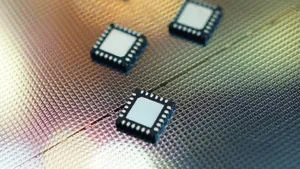 The SiT8918B high-temperature oscillator offers shock and vibration resistance in harsh environments. It has a wide frequency range (1.0-110MHz) and temperature range (-40°C to 125°C), with stability of ±20ppm for robotics applications in conditions characterised by thermal gradients and transient forces.
The SiT5356 is a reference clock for SoC and FPGA designs. It is compliant with GR-1244 Stratum 3 oscillator specifications for precise and stable timing. It integrates DualMEMS and TurboCompensation temperature-sensing technology and is rugged to withstand environmental stressors. It is factory-programmed to any combination of frequency, stability, voltage and pull range for a range of applications within industrial robotics.