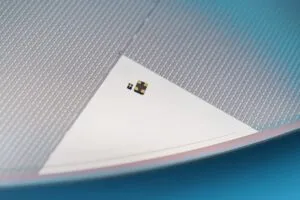
 With the 100th anniversary of the dynamic driver speaker’s invention approaching, it is an ideal time to reflect on familiar, coil-based transducers that reproduce sound in almost every true wireless stereo (TWS) earbud available today.
Over the years, speaker technology has evolved due to advances in physics, simulation and materials. The basic concept of transduction, however, has remained unchanged for nearly a century; long before the first earbud was ever made.
In a dynamic driver speaker, the speaker diaphragm moves at audible frequencies and directly displaces air to create sound. Transducer innovations include electrostatic, planar magnetic, and now solid-state MEMS transducers. All share the same ‘push-air’ concept, together with its associated product design and performance limitations.
Some designers have leveraged the characteristics of silicon and piezoelectric materials to enable unprecedented bandwidth, performance and musical detail in micro speakers. The real revolution will come with what’s on the horizon for MEMS transducers.
Sound from ultrasound
In the near future TWS earbuds will use a MEMS micro speaker that creates audible sound through ultrasonic waves rather than direct air displacement. This creates sound that would otherwise go undetected by the human ear.
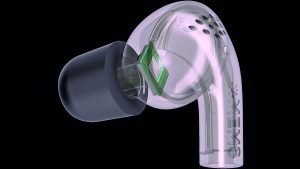 Sound from ultrasound has been a research topic since the 1960s, but has only just achieved the acoustic performance required for broad commercial appeal.
The key innovation is an ultrasonic amplitude modulation transduction principle, which involves converting analogue audio signals into ultrasonic air pulses that our ears hear as rich, bass-heavy, detailed, high-fidelity sound. To do so, a companion controller/amplifier asic is needed to modulate the audio into ultrasonic carrier signals, which drive the MEMS speaker to create acoustic air pulses.
These air pulses create different levels of pressure within the ear canal that is heard as sound in the audible frequency range due to the high acoustic impedance of the ear.
A flexible package
When this companion design is put in a TWS earbud, the most noteworthy benefit is the ability to reach 140dB SPL (sound pressure level) output at 20Hz – the target sound pressure level for high performance active noise cancellation (ANC) applications in vented, or leaky, TWS designs.
 The vented design is quite common in the TWS space because it prevents occlusion, which happens when a blockage of the ear canal produces internal resonance and amplifies the sounds the wearer’s body makes, such as walking, running, chewing, or talking.
One downside of vented designs is decreased SPL at low frequencies, sometimes as much as 20dB. Because an SPL of 120dB at 20Hz is most desirable for ANC performance, 140dB SPL occluded (not vented) is needed to account for the 20dB loss.
Today’s MEMS transducers, despite significantly improving sound quality over dynamic drivers, can achieve only 120dB SPL at 20Hz on their own, meaning they would still need to be paired with a dynamic driver to cancel out low frequency noise. Ultrasonic MEMS speakers do not have those limitations.
Additionally, ultrasonic speakers have extremely low latency –theoretically as low as 3µs – and a flat phase response with virtually no delay across the entire frequency band. This low latency and flat phase response, along with the high SPL output, result in a speaker that can more accurately reproduce today’s advanced sound formats, including high-resolution and spatial audio.
One less appreciated aspect of ANC performance is the need for a relatively soft speaker diaphragm in a dynamic driver to reach 140dB SPL at 20Hz. The downside of this soft surface is that it is not effective at blocking ambient noise on its own.
In contrast, an ultrasonic MEMS speaker generates ultrasonic airflow pulses that are unaffected by external noise at ambient frequencies. Furthermore, they are made from very stiff silicon with a resonance frequency more than five times the highest audible frequency. This means an ultrasonic MEMS speaker can effectively act as a form of passive noise isolation by minimising noise ingress to enhance ANC rather than detracting from it.
Ultrasonic speakers also have a very low acoustic total harmonic distortion (THD) of below 1% from 20Hz to 20kHz, and below 3% up to 40kHz. The low THD, low latency and flat phase response ensure more precise and clearer sound in TWS earbuds, with each instrument and voice sounding more distinct and natural.
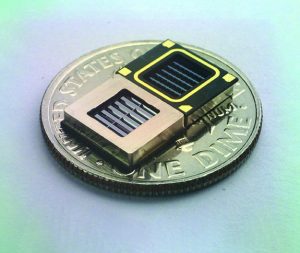
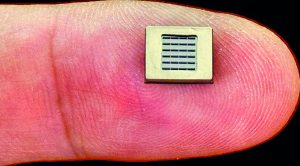
In terms of design, the speaker/controller combination is smaller in diameter and a fraction of the thickness than comparable dynamic drivers. This allows products to deliver improved audio performance without compromising form factor. Additionally, the ultrasonic speaker does not have any acoustic back volume requirements, which reduces mechanical design and acoustic tuning time. As a result TWS earbud packages will get smaller or include features that were previously too large to integrate.
Audio fact file
 * The dynamic speaker was invented in 1925 by Edward W Kellogg and Chester W Rice.
* Sound pressure level (SPL) is a decibel (dB) measure of the intensity of sound waves.
* Concert speakers and jet engine noise are typically measured as 140dB SPL.
The Cypress solid-state MEMS speaker by xMEMS is driven by a companion IC, called Alta. Operating closer to AM radio frequency than audible sound, the two work in concert to convert analogue voltage into acoustic air pulses. Alta modulates the incoming baseband signal into a dual sideband suppressed carrier (DSB-SC) AM signal, and Cypress demodulates in the acoustic domain, generating high frequency air pulses.
xMEMS’ Cypress is sampling to Tier-1 customers now and Alta prototype silicon will begin sampling later this year.
Cypress and Alta will be combined in a system-in-package that acts as a drop-in replacement for typical dynamic drivers found in TWS earbuds. Mass production is scheduled for the first half of 2025.
Wearables fact file
The first wearable computer was created by MIT’s Edward Thorp and Claude Shannon in 1961, writes Caroline Hayes.

Wearables are now integral parts of larger connected ecosystems. It was estimated that in 2022 there were more than 1.1 billion wearable gadgets in use worldwide, according to market research consultancy Research Nester. (Smart, Wearable Device Market Report)
Around 21% of adults worldwide own a smartwatch (Research Nester).
Athletes use smartwatches, fitness trackers and wearable sensors to monitor metrics such as heart rate, sleep quality and muscle strain, which helps optimise training and prevent injuries. (An example is SKLZ’s Hyper Speed, which monitors speed, agility and vertical leap.)
In a survey 74% of respondents thought wearing wearables and sensors would improve their ability to connect with other gadgets and the real world (Research Nester).
In a World Economic Forum survey, 92.1% of business executives predicted that by 2025, 10% of individuals would have internet-connected clothing.
Companies are collaborating with fashion brands to create devices to pair with business attire or to look as good at the gym as it does at a dinner party, says Aashi Mishra, research writer, strategist and marketer at Research Nester.
Customisation is another trend, says Mishra, with interchangeable bands, custom watch faces and more (e.g., the Oura and Gucci collaboration for fashion wearables to track health metrics such as heart rate and sleep).
In 2020 more than 27 million sports wearable technology units were supplied globally.
According to forecasts, the market for smart wearable devices is expected to reach $528.7bn by the end of 2036, a CAGR of 19.7% from 2024 to 2036. The market for smart wearables was valued at $64.9bn in 2023.
Advances in AI will mean wearables are likely to become more intuitive, while wearables with augmented reality capabilities could revolutionise the way we interact with the world around us, overlaying useful information directly in our field of vision, says Mishra. “Meta and EssilorLuxottica collaborated to introduce a new line of Ray-Ban Meta smart spectacles in September 2023. The updated glasses feature improved audio and cameras over 150 distinct bespoke frame and lens combinations, and a lighter, more comfortable design. The potential applications, from navigating to gaming to workplace training, are vast.”