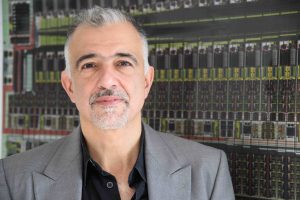
Regius Professor Christofer Toumazou has been recognised for his work saving and improving lives through leading edge medical research with the Elektra Lifetime Achievement Award. Professor Toumazou’s list of achievements includes cochlear implants for born-deaf children, an artificial pancreas for type 1 diabetics and a wireless heart monitor for personalised post-operative healthcare. He invented and commercialised a semiconductor device which is ...
Medical Electronics
Content related to medical electronics
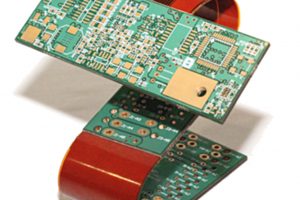
Rigid-flex PCBs hold key for medical wearables
PCBs are rigid plates to connect electronic circuitry while the most common basic characteristic of the human body is its flexibility. Mixing the two in wearable medical devices will need rigid-flex PCB designs, writes Mark Forbes Printed circuit boards (PCBs) used in most electronic products are basically rigid plates to connect circuitry. But demand for flexible PCBs (or flexible circuits) is ...
Pores stop gold wires cracking in membrane for medical wearables
The US National Institute of Standards and Technology comes up with a way to build durable gold wires onto flexible, thin plastic film.
Nanotherm PCBs available for automotive and avionics
Thermal PCB company Cambridge Nanotherm has introduced a Six Sigma PCB fabrication route with Elvia PCB Group. “Aimed at the most demanding and heavily regulated industries such as aerospace and automotive, applying the six sigma process ensures 99.99966% of all steps to produce a part are statistically free of defects. In other words, only 3.4 are defective per million,” said ...
NANO16: Europe can be world leader in digital healthcare
Europe has the know-how to be the world leader in digital healthcare, Professor Shahid Ali of Salford University told the European Nanoelectronics Forum 2016.
Maxim ARM MCU adds security to wearables
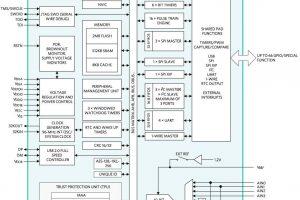
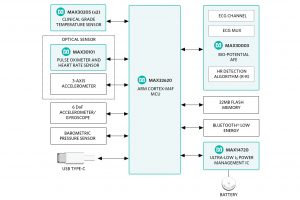
Maxim has introduced an ARM Coterx-M4F microcontroller with hardware security to protect IP, algorithms, and user data in wearables. Active power consumption is 127µW/MHz, or 32µW/MHz DMA and 3.5µW in sleep – claimed to be industry’s lowest. For sleep-wake operation there is a 5µs wake-up to 96MHz Called MAX32631, security is embodied in a ‘trust protection unit’ which includes hardware encryption and ...
Imperial College HIV test performed on USB stick
Scientists at Imperial College London and DNA Electronics have detected HIV in a drop of blood using a detector that could be built into a USB stick. Results were available in under 30 minutes. “Current tests to detect the amount of virus take at least three days, often longer, and involves sending a blood sample to a laboratory. In many ...
Electronica: Tough glass shuns fingerprints
Conturan Daro glass shuns reflections, dirt and fingerprints because, for the first time claims manufacturer Schott, it combines anti-glare and oleophobic surface protection. The firm covers the whole glass manufacturing chain from float casting through coating to CNC machining and polishing, and offers advice on applications across industrial, medical, signage, railways, food, lighting and touch. It uses its float process to create ...
Electronica 2016: Maxim goes mbed for fitness
A sensor system platform, with the ARM mbed hardware development kit (HDK), from Maxim Integrated Products is intended for high-end fitness monitor designs. The hSensor Platform, which will be seen next week at Electronica in Munich, is offered as the MAXREFDES100# reference design, includes an hSensor board, firmware with drivers, a debugger board, and a graphical user interface (GUI). “With access ...
Heart rate sensor on a chip from Osram
An optoelectronic sensor IC from Osram Semiconductors can be used to monitor heart rate and blood oxygen levels.
Electronics Weekly