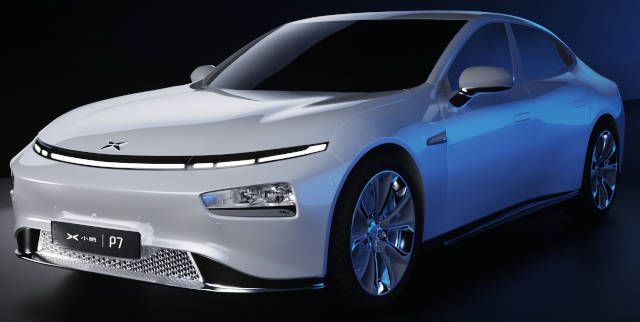
F9 receives GPS, GLONASS, Galileo and BeiDou satellite positioning signals and has been incorporated into the vehicle’s Xpilot 3.0 ADAS (driver assistance system) for use in navigation-guided driving, automated parking and autonomous driving.
“For instance, once a navigation destination is set on a specific highway, the P7 will follow the route guidance to execute autonomous lane changing, switching to high-speed routes and selecting the optimal route in real-time,” according to u-blox.
F9 uses GNSS signals in multiple frequency bands (L1/L2/L5) to correct positioning errors caused by the ionosphere and to speed initial position fixing.
Being able to use signals from four GNSS constellations increasing the number of satellites that are visible at any given time for more accuracy.
“To achieve centimetre-level accuracy, F9 also uses a multi-band real-time kinematic [RTK] feature that measures the phase of each signal in addition to the clock data. An RTK update rate up to 20Hz is possible,” said u-blox. “The platform sets a high standard for security with built-in jamming and spoofing detection that protect against intentional and unintentional interference. Dead reckoning technology based on inertial sensors extends performance to otherwise challenging urban environments.”
The u-blox part is already on the road in P7 cars.