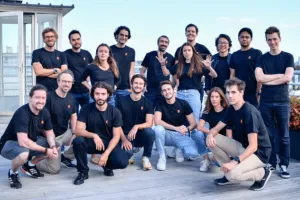
“By bringing power directly into the processor package, we’re delivering the performance and efficiency AI needs to keep scaling beyond today’s limits,” says CEO Peng Zou. AI accelerators and GPUs are already pushing past 2KW per chip.
Conventional power delivery forces very high electrical current to travel long, resistive paths before reaching the processor, wasting energy and limiting performance.
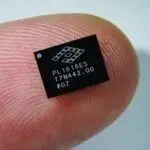
PowerLattice claims to have developed the industry’s first power delivery chiplet, combining miniaturised on-die magnetic inductors, advanced voltage control circuit innovations, a vertical design and a programmable software layer, tightly coupling power and compute and delivering power precisely where and when it’s needed.
Traditional systems deliver power to AI chips by converting AC power from the grid into DC power, which then gets transformed again into low-voltage (around one volt) DC, usable by the GPU. With that voltage drop, current must increase to conserve power. This exchange happens near the processor, but the current still travels a meaningful distance in its low-voltage state.
The closer you get to the processor, the less distance the high current has to travel and the less the power loss. Instead of dropping the voltage a few centimetres away from the processor, the company figured out how to do it millimetres away. The chiplets sit under the processor’s package substrate, to which they’re connected
PowerLattice says its chiplet:
- Unlocks chip performance: PowerLattice lifts the power ceiling, reduces power-related throttling and increases compute utilization, effectively doubling performance and enabling significantly more AI computation per rack.
- Cuts the AI power bill: By tightly coupling power and compute, PowerLattice dramatically reduces energy loss, lowering compute power needs by more than 50%.
- Delivers AI-grade reliability: As AI clusters scale to hundreds of thousands of GPUs and accelerators, PowerLattice delivers power with the consistency, precision and stability needed to ensure optimal performance and system longevity.
The company has raised $31 million to pursue the technology. Joining the board from the company’s investors are are Pat Gelsinger, General Partner at Playground Global, and Dr. Steve Fu, Partner at Celesta Capital.