A key bottleneck in datacentres is the transfer of data between main memory and the computing unit. FeFETs will enable computing “directly in memory”, with lower latency and energy consumption.
“We are designing a platform that more closely links the memory technology and computing power of state-of-the-art chips,” says Fraunhofer’s Dr. Maximilian Lederer.
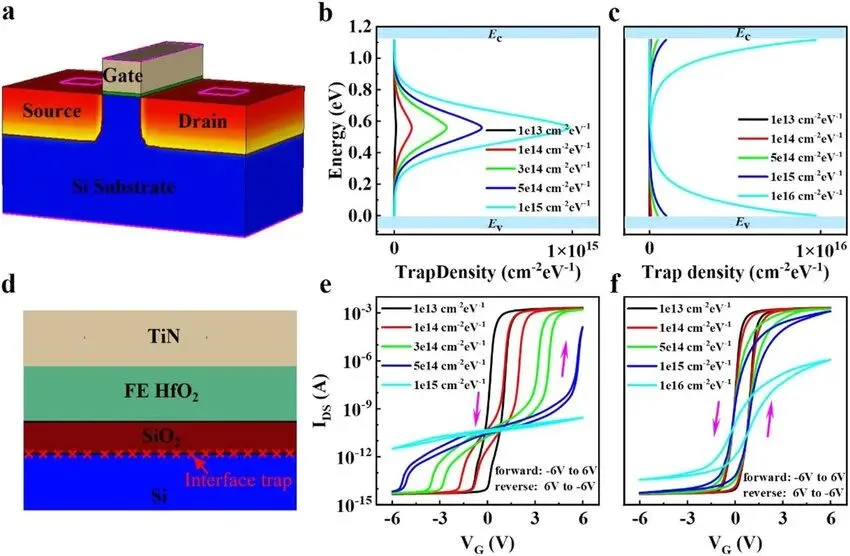
Hafnium oxide-based ferroelectric FETs (FeFETs) are considered particularly suitable for this purpose: thanks to thin hafnium oxide layers, the technology can be integrated into modern semiconductor processes.
In addition, these components operate capacitively (rather than resistively) and thus consume up to about 100 times less energy in embedded systems than comparable non-volatile memory solutions. The goal of the collaboration is to establish a 300 mm research line that develops memory not only for consumer applications, but also for automotive, industrial, and medical technology.