
A smartphone that measures gravity and a noise monitor for oceans are among the top university projects which Electronics Weekly has reported on in 2016.
Volcano watching smartphone in research top 5
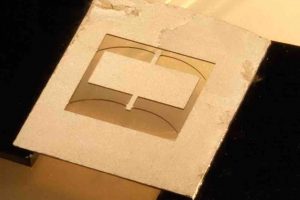
A smartphone that measures gravity and a noise monitor for oceans are among the top university projects which Electronics Weekly has reported on in 2016.

Russian scientists have let two electrons loose in a system of quantum dots to create a quantum computer memory cell of a higher dimension than a quantum bit.
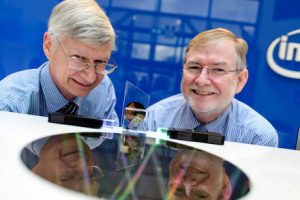
Intel has committed to invest $1.5m over the next three years in research in semiconductor materials, devices and photonics technologies at Tyndall National Institute, the Irish ICT research institute. Intel has been investing in research at the Cork-based institute since 2009. Bernie Capraro, Research Manager, Silicon Technology at Intel Ireland, said: “The standard of work from Tyndall researchers is top-class, from ...
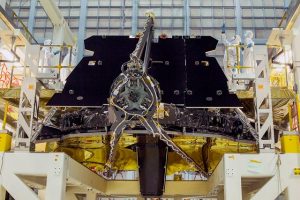
NASA has installed the instrument package into the James Webb Space Telescope. Consisting of cameras and spectrographs, it will record light from the telescope’s huge golden mirror, once it is in orbit. “This is a tremendous accomplishment for our worldwide team,” said project scientist John Mather. “There are vital instruments in this package from Europe and Canada as well as ...
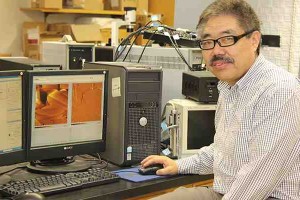
Researchers at the University of Georgia and at Ben-Gurion University in Israel claim to have demonstrated how nanoscale electronic components can be made from single DNA molecules. According to the study’s lead author, Bingqian Xu, an associate professor in the UGA College of Engineering: “For 50 years, we have been able to place more and more computing power onto smaller ...
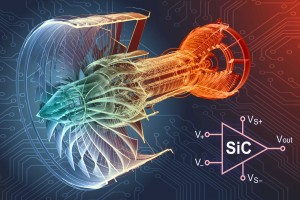
Raytheon UK has collaborated with Newcastle University to produce silicon carbide (SiC) based amplifier circuitry with operational amplifier like characteristics. The research has used the thermal characteristics of SiC not in a high power device, but in small-signal circuitry that can operate in high temperatures. “To date, the focus on Silicon Carbide semiconductors has been power electronics and exploiting the ...
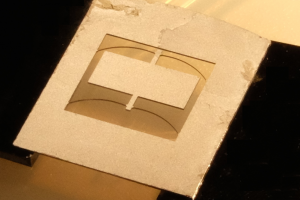
Scientists at the University of Glasgow have created a very low cost gravity meter which could be used to monitor volcanic activity using commercial MEMS device technology found as accelerometers in smartphones. The result they says is a sensitive detector capable of measuring minute changes in gravity, and at significantly lower cost than a traditional gravity meter (gravimeters). They believe ...

Physicists at the University of Glasgow have developed a new and inexpensive way to make radially polarised white light, which could help scientific advances in astronomy and microscopy. Dr Neal Radwell and Dr Sonja Franke-Arnold, from the University’s School of Physics and Astronomy, have discovered a new way of producing radially polarised beams, using broadband white light rather than single ...

Samsung Electronics UK is part of a European Union-funded research project to develop a power analyst tool to make the mobile graphics processor (GPU) more power efficient. Samsung has teamed up with Edinburgh-based GPU technology company Codeplay, Greece-based silicon IP developer Think Silicon and TU Berlin to develop a tool for enabling smartphone batteries to last longer while running advanced video ...
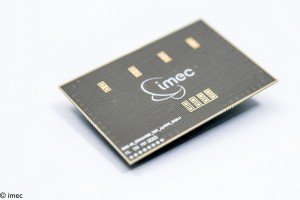
Sensors placed everywhere generating a broad stream of data will be the basis of applications for the internet of things of the future. These will be sensors that are many times smarter and more sensitive than the ones we have today. They will also be produced and installed in far greater numbers and be much cheaper than they are now. ...
