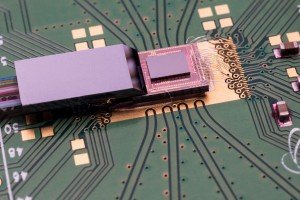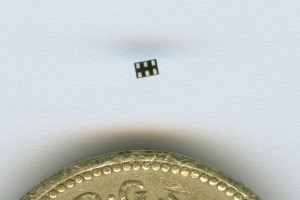
If we want to make silicon photonics technology cost-effective, we have to optimize the packaging, writes Joris Van Campenhout, Imec programme director for optical I/O. Optical data transmission is a key answer to the ever growing data traffic. Today, data centres make use of hundreds of thousands optical links that interconnect the server racks at network rates up to 40Gbit/s. ...
Device R&D
Predictions 2016: solar cells target 30% efficiency – Imec
We need to maximise the energy yield of our solar cells and panels, writes Jef Poortmans, scientific director for photovoltaics at Imec For solar energy in the past, achieving as low a ‘cost per watt peak’ as possible was important. Solar cells and panels were optimised to generate as much power as possible at as low a cost as possible under ideal ...
Predictions 2016: flexible chip tech gets real – Imec
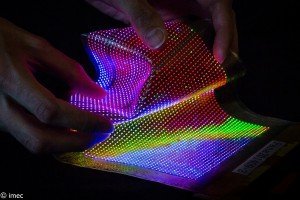
Determining what will be needed in five years’ time is a major challenge, writes Paul Heremans, technology director large-area electronics at the Imec research centre in Belgium Our task as a research center is to offer our partners technical solutions for their future applications, two to three product generations ahead in time. But when it comes to flexible electronics, the ...
Government to fund photonics research in North Wales
Innovate UK, the government’s technology investment organisation is to put £500,000 into the photonics and optoelectronics research cluster in North Wales. The aim is to encourage R&D projects that may be too risky for companies to take forward without any support, and where the majority of the project activities are carried out in North Wales. Funding for individual projects will range from £50,000 to ...
European researchers claim terahertz breakthrough using CMOS
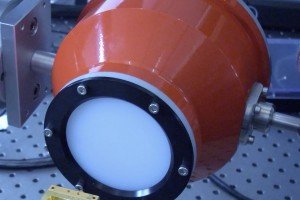
Airbus is leading a research group looking at terahertz imaging technology and it is claiming a breakthrough which will see the imaging technology used in space observation, medical imaging, industrial automation and security screening. The work to develop a new camera that delivers high accuracy using terahertz waves with lower operating costs in part of a European Union project called ...
Breakthrough for video-pill cancer imaging
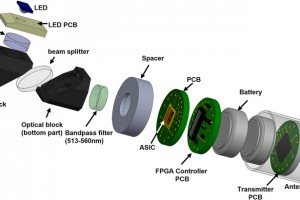
Researchers from the University of Glasgow claim to have found a way to make swallowable cameras which can be used for detecting cancers of the throat and gut. Tiny sensing systems small enough for patients to swallow have been used by doctors but these devices have relied on additional illumination with a separate light source and have been restricted to ...
Optical transistor will be faster than CMOS devices
Researchers in the US have demonstrated what is in effect an ‘optical transistor’ which can modulate light, as in optical fibre communications, at terahertz frequencies. The team at Purdue University claim that the so-called “plasmonic oxide material” could make possible devices for optical communications that are at least 10 times faster than conventional technologies. The optical material made of aluminum-doped ...
University embeds RFID chips in yarn
Researchers at Nottingham Trent University have come up with a way of embedding RFID chips in yarns which can then be woven or knitted to make fabrics for clothing. Professor Tilak Dias of the Advanced Textiles Research Group of the School of Art & Design, claims that the embedded chips “cannot be seen in situ by the naked eye”. He has patented ...
Wearable tech will revolutionise healthcare, says Imperial
Scientists from The Hamlyn Centre, Imperial College London, are presenting their latest research in wearable tech at the Royal Society’s annual Summer Science Exhibition, which officially opens to the public today. The theme for the Hamlyn Centre’s exhibit is “smart sensing”, technologies for wearables devices. It will include very low power ICs and sensors, ranging from optical, impedance, and micro-fluidics. Professor Guang-Zhong ...
D-Wave puts 1,000 qubits on a chip
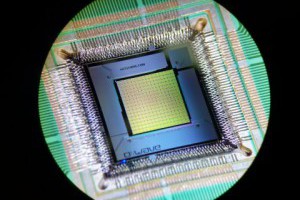
D-Wave Systems has put 1,000 qubits, comprising 128,000 Josephson Junctions, on a chip using a six-metal layer planar process with 0.25μm features, the company reports. D-Wave’s quantum computer runs a quantum annealing algorithm to find the lowest points, corresponding to optimal or near optimal solutions, in a virtual “energy landscape.” Every additional qubit doubles the search space of the processor. ...
Electronics Weekly