
NASA is widely seen as the arbiter of US space programmes, and in terms of space-based research, interplanetary exploration and other above-board subjects, this view is correct. But its budget pales in comparison to that of the US military, which is far and away the largest of its kind: militaries worldwide spent $32 billion in 2009 on space, according to a report by Euroconsult
Device R&D
MIT: optical diode on silicon
MIT has made a silicon-compatible 'diode for light', for all-optical chips. "To develop the device, the researchers had to find a material that is both transparent and magnetic, two characteristics that rarely...
Space: Russian Mars probe phones home
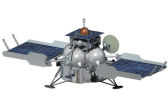
Phobos Grunt, the Russian Mars probe that's been stuck in a precipitously low Earth orbit for a fortnight, has finally been contacted by a European Space Agency ground station in Perth, Australia. It is unclear, however, if this means the craft and its intricate Martian soil-sampling mission can be rescued.
Electronic contact lens displays pixels on the eyes
The future of augmented-reality technology is here - as long as you're a rabbit. Bioengineers have placed the first contact lenses containing electronic displays into the eyes of rabbits as a first step on the way to proving they are safe for humans. The bunnies suffered no ill effects, the researchers say.
Space: Cash flow gives Xcor spaceplane momentum
Having cleared a critical cash hurdle, suborbital spaceflight aspirant Xcor is pressing ahead with spaceplane development in its bid to carry fare-paying passengers to the edge of space.
Toyota shows healthcare robots
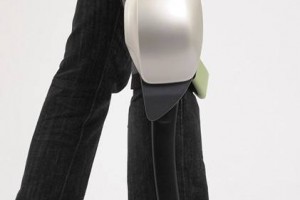
Toyota has revealed a series of healthcare robots, including one to help people with a paralysed leg walk. The machines incorporate fast servos and sensors that detect posture and other subject attributes. Two of them use technology...
Sensor-laden dragonfly may help future robots soar
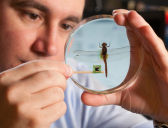
Researchers are using a microchip attached to a dragonfly's belly to understand the complex mechanics of its flight.
Space: Stalled Phobos probe may fall to Earth in January
The world's telescopes are still trying to contact a Russian space probe meant to visit the Martian moon Phobos, which has been stuck in Earth orbit since its launch on 8 November.
Thales, DCNS ready sea borne trials of unmanned rotorcraft
Thales and French naval defence systems specialist DCNS are readying sea borne trials of a system that promises world-beating accuracy for shipboard automated take-off and landing (ATOL) of unmanned rotorcraft.
Successful Soyuz launch saves ISS operations
Icy temperatures didn't stop the long-awaited launch of the first crewed Russian Soyuz rocket since all such missions were suspended following the crash of a cargo module in August.
