Home » News » Research » Process R&D (page 4)

Process R&D

Imec gets closer to directed self-assembly

an-Steegen-300x200.jpg

Imec, Tokyo Electron and Merck have developed a directed self-assembly (DSA) process for a via patterning process compatible with the 7nm technology node and have significantly improved DSA defectivity to 24 defects/cm2.

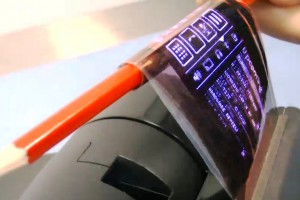
Cambridge firm creates first flexible OLED display

OLED-Pencil-FlexEnable-300x200.jpg

Cambridge start-up FlexEnable claims to have made a breakthrough in printable electronics which will see flexible displays in volume production by the end of the year. The company has been in stealth mode for two years developing a process for making plastic electronic circuits that can be printed in volume on flexible films as thin as 25-micron. The breakthrough is ...

ARM describes finfets in the real-world

Finfet technology, with its 3D structure, is seen as the key semiconductor technology for the next generation of deep sub-micron chip design. Leah Schuth describes how physical IP developers will rise to the challenge. The semiconductor industry faces a major change in the way that ICs are made in order to keep improving performance and density – a change that ...

Finfet alternative touted by flash pioneer

A variant of 3D transistor technology to rival the finfet is being proposed by Professor Fujio Masuoka, the man credited with pioneering flash memory. The technology, called Surrounding-Gate-Transistor (SGT), is not new, but has yet to be presented as a commercial alternative to traditional planar transistor technology that overcomes the current physical limits of Moore’s Law. The SGT was originally conceived ...

Nanomagnets challenge transistors

Researchers at the Technische Universität München (TUM) have demonstrated a new kind of building block for digital integrated circuits which uses 3D arrangements of nano-scale magnets instead of transistors.

Europe’s big push in graphene research

Europe’s Graphene Flagship research project is doubling in size with the numbers of small companies getting involved increasing. Graphene was made and tested in Europe, leading to the 2010 Nobel Prize in Physics for Andre Geim and Konstantin Novoselov from the University of Manchester. The hope is that this  €1bn programme will place European companies “in the driving seat for ...

Surrey University sets up graphene R&D centre

The University of Surrey is setting up a research centre to focus on graphene, the next generation semiconductor technology, which is also the focus of a €1bn Europe research programme. The graphene centre at Surrey with be part of the university’s Advanced Technology Institute (ATI) and will include manufacturing capabilities. Graphene is widely anticipated to have an impact on high frequency ...

Europe’s €1bn graphene research grows bigger

Europe’s flagship graphene collaboration research project  is about to get even larger. One of the largest-ever European research initiatives will expand further as result of a €9m competitive call. New industrial and academic partners will be invited to join the of Graphene Flagship consortium, which already has 76 partners from 17 countries. The expansion of the project will be made next week at the ...