The money comes from “over twenty high-net-worth investors”, according to the company.
Kodiaq intends its electrolytes to displace vanadium and lithium-based systems.
“Energy storage doesn’t have to be dependent on the price or availability of metals,” claimed CEO David Fyfe. “Our approach will replace that dependency with something globally available, sustainable and scalable. This investment enables us to move development to pilot projects.”
Its aim is “a substantial funding round in mid-2026 which will be used to establish scaled-up demonstration projects in several global markets”.
Beyond this, “the strategy is to retrofit existing flow battery systems” and “to co-develop with OEMs and integrators for future-generation, long-duration storage systems”.
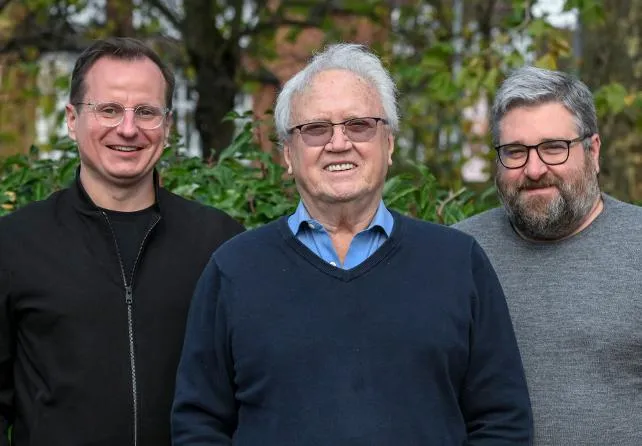
Supporting intellectual property comes from University of Cambridge research, and Kodiaq was co-founded by Professor Oren Scherman (chief scientific officer) and Kamil Sokolowski (CTO).
Flow batteries use pairs of reactive chemical stored in tanks, which are passed though an electro-chemical reaction vessel to produce electricity, or are fed back though the reaction vessel and supplied with electricity to re-generate the original chemicals – this decouples energy storage capacity (tank size) from power capability (reactor size).
They have been proposed for grid-scale storage, but are held back by the large quantities of vanadium required.
The chemistry involved has not been revealed, although they are “based on organic molecules composed of organic elements such as nitrogen, carbon and hydrogen”, CTO Sokolowski told Electronics Weekly.
Team members have been involved in patent WO2024149891A1 ‘Redox flow battery’, and the scientific paper ‘Associative pyridinium electrolytes for air-tolerant redox flow batteries’.
Do these give any clues to the company’s current intellectual property?
“The chemistries they are currently developing is part of ongoing R&D and so they don’t want to reveal their strategic directions to potential competitors at this point in time,” said a spokeswoman for Kodiaq.
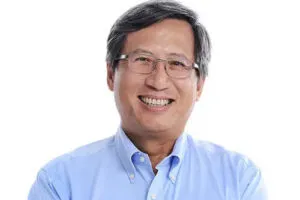
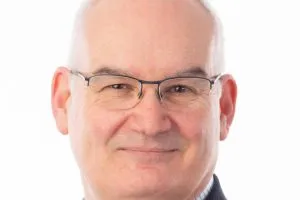
Photo, from the left: Kamil Sokolowski, David Fife, Oren Scherman