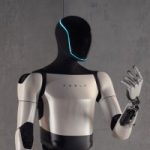
The five likely leaders are Unitree, UBTech, Agibot and Xiaomi of China and Agility Robotics and Tesla of the US.
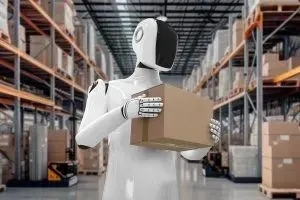
Most production deployments of humanoid robots during this time will remain limited to tightly controlled environments, rather than in dynamic and high-throughput supply chain operations.
 Humanoid robots — designed to mimic the human body in shape, function, and locomotion — are attracting attention from chief supply chain officers (CSCOs) seeking solutions to workforce challenges and rising labour costs.
These robots feature AI-enabled systems, advanced sensors and machine-learning algorithms intended to dynamically adapt to multiple tasks.
However, Gartner research indicates that the hype surrounding humanoid robots is outpacing their readiness for large-scale deployment.
“The promise of humanoid robots is compelling, but the reality is that the technology remains immature and far from meeting expectations for versatility and cost-effectiveness,” says Gartner’s Abdil Tunca, “CSCOs must carefully evaluate readiness and avoid overcommitting resources to solutions that cannot yet deliver on their potential.”
Humanoid robots replicate human form and movement, incorporating heads with sensors and cameras, arms and grippers for manipulation, and legs for locomotion.
While this form factor offers certain advantages, Gartner notes that alternative designs — such as polyfunctional robots equipped with wheels or sensors in unconventional placements —may provide superior performance and adaptability for supply chain operations.
Despite their potential, humanoid robots face significant barriers to supply chain, logistics and manufacturing adoption:
- Technological limitations: current models lack the dexterity, intelligence and adaptability required for complex, unstructured environments such as mixed SKU picking, trailer unloading or exception handling in high velocity warehouses.
- Integration complexity: compatibility with existing systems and workflows remains a challenge.
- High costs: substantial upfront investment and ongoing maintenance expenses must be weighed against uncertain returns. With the current technology and costs, humanoids cost multiple times more than task-specific polyfunctional robots while delivering lower throughput and uptime.
- Energy constraints: limited battery life restricts operational time for high-mobility operations.
Unlike humanoid robots, polyfunctional robots are optimised for flexibility without being constrained by human-like design.
For example, a polyfunctional robot with wheels and a telescopic arm can move boxes, pick cases, scan inventory and perform inspections, usually with higher uptime and using less energy than a humanoid that is attempting the same tasks.
Polyfunctional robots can integrate features that enhance efficiency and durability, making them better suited for dynamic supply chain environments.