It is branded ‘Ucode X’ and delivered in wafer form.
“With Ucode X, we’re expanding what’s possible in Rain RFID,” claimed NXP director of RFID, Ralf Kodritsch. “This chip combines our most advanced RF performance with flexible memory and configuration options. It’s a step forward for retailers, brands and logistics providers looking to increase RFID adoption.”
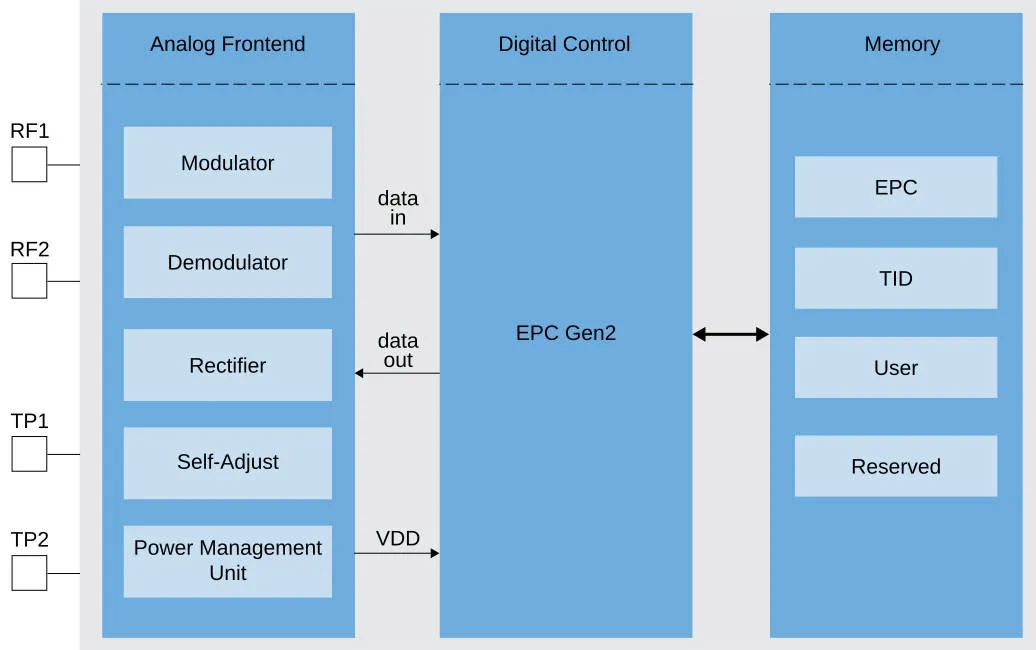
A number of configurations are possible, that share on-board memory differently between various functions.
“These options help users strike the right balance between EPC [electronic product code] size and available user memory for their needs,” said NXP. “More EPC memory allows additional product attributes to be stored on-chip and supports compliance with regulations such as the USA FDA’s FSMA 204. User memory offers an independent storage area for any kind of user data.”
The ICs are GS1 EPC Gen2 v2.1 compliant and support the GS1 Gen2v2 ‘untraceable’ privacy command.
As well as for EPC and user data, the various configurations also allocate memory to support subsets of ‘access password’, ‘kill password’, ‘permalock’, ‘lock’ and ‘untraceable’ data for the standard.
“By default, Ucode X offers separate access and kill passwords,” said NXP. “For even greater security, both EPC and user memory can be write protected, either temporarily or permanently using the lock and permalock commands respectively. If desired, password memory can be reallocated to provide greater EPC or user memory capacity. NXP’s implementation supports full and partial hiding of the EPC, tag ID and user memory. This feature allows unique item-identifiable data stored in memory to remain hidden, ensuring, for example, that no unique product information is revealed by the tag.”
The ICs are sensitive enough for ‘overhead reading’, where many tags in a space are scanned at the same time, and operating range can also be reduced from its full distance if required.
Read and write sensitivity are -26.2dBm and -23dBm respectively. 32 bits can be written in 1.9ms.
Use is foreseen in retail, logistics and pharmaceuticals.
The data sheet has not been made public. Instead, this limited fact sheet is available from NXP’s website