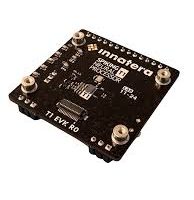
Israeli startup Polyn Technology has got tested silicon of its Neuromorphic Analogue Signal Processing (NASP) technology and is ready to ship.

NASP chips with AI cores process sensor signals in their native analogue form in microseconds, using microwatt-level power and eliminating all overhead associated with digital operations.
This is suitable for always-on edge devices. Application-specific NASP chips can be designed for a diverse range of edge AI applications, including audio, vibration, wearables, robotics, industrial, and automotive sensing.
Production of the device validates both NASP technology and Polyn’s design tools, which automatically convert trained digital neural network models into ultra-low-power analogue neuromorphic cores ready for manufacturing in standard CMOS processes. The testing confirmed the chip’s parameters strictly match its model.
“This is not just another chip — it’s proof that our novel technology works in silicon,” said Aleksandr Timofeev, CEO and Founder of Polyn Technology. “For the first time, we generated an asynchronous, fully analogue neural-network core implementation in silicon directly from a digital model. It opens the door to an entirely new design paradigm — neural computation in the analog domain, with digital-class accuracy and microwatt-level energy use.”
This first chip contains a VAD core for real-time voice activity detection. It marks the first step toward a new level of voice processing offered by Polyn. It will be followed by other cores Polyn is developing for speaker recognition and voice extraction, enhancing home.
NASP chips with AI cores process sensor signals in their native analog form in microseconds, using microwatt-level power and eliminating all overhead associated with digital operations. This is suitable for always-on edge devices. Application-specific NASP chips can be designed for a diverse range of edge AI applications, including audio, vibration, wearables, robotics, industrial, and automotive sensing.
This key milestone validates both NASP technology and Polyn’s revolutionary design tools, which automatically convert trained digital neural network models into ultra-low-power analogue neuromorphic cores ready for manufacturing in standard CMOS processes. The testing confirmed the chip’s parameters strictly match its model.
This first chip contains a VAD core for real-time voice activity detection. It marks the first step toward a new level of voice processing offered by POLYN. It will be followed by other cores POLYN is developing for speaker recognition and voice extraction, enhancing home appliances, critical communications headsets, and other voice-controlled devices.
Customers developing products with ultra-low power voice control can apply online for the NASP VAD chip evaluation kit.
The first NASP VAD chip offers:
- Ultra-low power: approximately 34 µW during continuous operation
- Ultra-low latency: 50 microseconds per inference
- Fully asynchronous operation: no clock, no ADC/DAC conversion
Polyn’s NASP technology and design tools give semiconductor and AI developers a new way to quickly implement neural networks directly in analogue silicon. It offers process-agnostic design across 40–90 nm CMOS nodes and automatic conversion from digital ML models.
“The successful introduction of our first NASP chip transforms NASP from a concept into a production-ready technology,” said Timofeev. “It proves that analogue neuromorphic computation can coexist with today’s digital flows — opening vast opportunities for chipmakers, OEMs, and AI innovators.”
Polyn is preparing evaluation kits for early adopters and extending the implementation of its NASP product families for automotive, critical communication, and wearable applications.
Polyn has a registered office in the UK and has a corporate office and R&D centre in Israel.
Prophesee adds event-based neuromorphic vision to Raspberry Pi