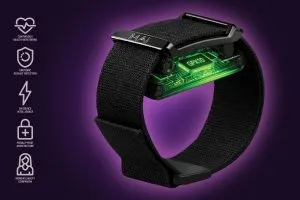

Figure 1: STATSports’ Apex employs Bluetooth LE connectivity to wirelessly sync sports-specific metrics to smartphones and tablets for coaches to make informed training decisions
In today’s world of sport, the difference between winning and losing can come down to the finest of margins. Results are routinely decided by milliseconds, millimetres or blink-and-you-missed-it moments.
Yet even precise metrics such as speed and distance are still quite rudimentary in nature. At best they can tell observers what happened, as opposed to why it happened and how it could be improved. The real sporting gains are made by understanding sports performance at a much deeper, more nuanced level.
A technology-based approach to analysing athletic performance is increasingly helping to take away the guesswork and narrow the margin for error. Advanced analytics can transform raw data into actionable insights – both live and retrospectively – providing sports industry stakeholders with enormous opportunities right across the field. Advancing technologies will push these limits even further.
Monitoring the metrics that matter
While it’s useful to monitor how fast an athlete moves or a player throws a ball – for example, an elite baseball pitcher can hit speeds up to 174kmph – dozens of other datapoints combine to build a unique profile of an individual’s skills, technique, power, endurance, performance, recovery and development.
Technology is making these metrics readily available. Tools such as inertial sensors, anchor devices and location services form systems that measure aspects of sport and activity in near real time, including the location, movement, speed, acceleration, orientation and impact forces of a player, ball, bat, boot or any other sports gear.
Imagine, for example, an ultra-compact advanced tracking device embedded inside a basketball, capable of crunching endless location and movement data to immediately provide tailored insights not only on where to shoot from, but how the individual player can take the shot, or pass and dribble more effectively based on their control of the ball.
The high volume of raw data can be processed and analysed using algorithms running on the sensor or wearable’s integrated wireless SoC’s embedded processor before the information is forwarded, via low latency connectivity, to an accompanying app on the user’s smartphone or a web-based dashboard on their laptop.
Wearable tech attached to the wrist, chest, or other parts of the body enables a much deeper dive into data, potentially revealing key information about an athlete’s heart rate variability, VO2 max (the maximum rate of oxygen consumption attainable during physical exertion), muscle fatigue, lactic acid, power output and other important physical parameters.
Developers of continuous glucose monitoring devices are also starting to market their technology for sports; glucose levels give athletes an indication of whether they need to add energy to continue performing.
In the case of basketball, body-worn sensors and predictive models can be used to track specific metrics such as the balance of the body to indicate the likelihood of a player being injured, based on their individual movement patterns and workload.
One example is the Apex device series, used by major international sporting organisations including English Premier League football clubs. Developed by Northern Ireland-based data-tracking company STATSports, the Apex device is embedded in a custom, lightweight vest worn by the athlete and integrates a range of sensors including a high impact accelerometer, gyroscope, magnetometer and augmented global navigation satellite system. These sensors provide data, including maximum and average heart rate, total distance covered, current and maximum speed, number of sprints, accelerations, impacts, dynamic stress load and step balance. Bluetooth LE connectivity wirelessly syncs the accurate and reliable sports-specific metrics to smartphones and tablets for coaches to make informed decisions during a match or training session.
The power of predictive analytics
The ultimate game-changer will come in the form of predictive modelling and data-driven analytics performed at the edge (making data-driven decisions as close as possible to the integrated sensors themselves).
Figure 2: Edge AI on the nRF54H20 SoC enables enables local processing to use less power than sending data over the air
When relevant data is crunched, analysed and interpreted using the power of edge AI and machine learning (ML) algorithms, sports analysts will not only be able to take advantage of even more accurate, personalised insights, but use the technology to anticipate trends and predict future outcomes on and off the field.
Adding AI and ML, allowing computers to learn without direct programming or instructions to the mix, will allow, for example, a sports wearable to use the same sensors as before to continuously monitor several performance parameters simultaneously, uncovering meaningful patterns in the process.
By analysing both historical data and real-time sensor information, statistical models can pinpoint factors that have a major impact on the way athletes prepare, perform, recover and repeat, not to mention identify opposition strategies and gauge overall team dynamics.
Moving forward, data-based insights are expected to play a key role in tactical decision-making at the highest levels of sport. Eventually AI and ML algorithms will even be used to run incredibly detailed simulations of entire games and seasons, considering countless variables simultaneously, to help solve complex optimisation challenges.
The impact of these rapidly developing technologies will stretch well beyond the track, field or court.
For example, it will become common for sports franchises to use advanced data analytics to enhance fan engagement by creating more immersive and interactive experiences. It will also be possible to personalise content through AI-driven systems that tailor recommendations to individual interests and preferences. Analytical insights will be used to drive revenues through personalised marketing campaigns, dynamic ticket pricing and more.
Integrating more advanced SoCs alongside AI/ML capabilities will allow edge devices to handle significantly more of the processing burden on their own. The benefits of edge computing include savings on transmit power, extended battery life and reducing the costs associated with employing big data sensors. It also makes data more secure and private because it remains on the device itself –something that’s especially valuable in the high-profile landscape of professional sport.
There is little doubt this technology will continue to influence sport. According to Allied Market Research, the global artificial intelligence sports market is projected to reach $19.2bn by 2030, growing at a CAGR of 30.3% from 2021 to 2030.
SoCs optimised for edge AI
In the future ever more powerful processors will enable ever more sophisticated sports analytics solutions. Supporting wireless connectivity and supervising a host of sensors that can generate a multitude of datapoints is one thing, but making sense of all that data in context and quickly enough to enable rapid and effective decision-making demands an SoC with serious processing heft and the ability to perform ML and sensor fusion at the edge.
ML algorithms bring the ability to deal with a large volume of data and extract relevant information from large datasets. To get a complete picture requires combining different data streams from multiple sensors and that requires an SoC capable of sensor fusion so it can filter information and determine which data points from all the different sensors correspond to the same activity, and which do not.
Running AI and ML applications successfully on battery-powered wireless chips requires powerful computational capabilities at modest power consumption levels.
For example, Nordic’s latest SoCs offer Arm Cortex-M33 processing for powerful mobile computing at low power consumption. This adds up to achieving 10-times as much data processing than previously possible, says the company. Alternatively, it allows the same amount of data processing 10-times faster, with the device rapidly going back into ultra-low energy sleep mode, and so using 10-times less power.
By employing edge AI on an advanced SoC, the local processing will use less power than sending data over the air, allowing a sports analytics device to have longer operation and smaller battery size. Processing data locally in real time means there is no need to use bandwidth to send raw data, while no time will be wasted waiting for a response from the cloud.
These technological advances auger well for the future of sport. To gain a competitive edge leading athletes, coaches and teams will turn to solutions employing the power of edge computing. With the systems in place to deliver more powerful insights through more advanced data analytics, athletic achievement is set to scale new heights.