Manual, time-consuming processes that filled my grandparents’ workdays are now automated and easy to monitor. My 95-year-old grandmother loved the luxury of buying pasteurised milk at the grocery store because she remembers hours spent milking cows and milk spoiled due to limited refrigeration. Today, robotic milkers save farmers significant labour and time, allowing them to focus on other operational priorities.
Innovating operational management processes is critical for the sustainability of our farms. Despite approximately half the world’s land still being used for agriculture, the total amount of agricultural land has steadily declined for the first time in modern history. In 2025, the Food and Agriculture Organization of the United Nations reported that, from 2000 to 2023, global agricultural land contracted by 2%.
Ongoing challenges such as weather incidents, labour shortages, rising costs and other economic factors are pushing farmers to seek new ideas and opportunities. Modern agriculture is being transformed by electronics, data and cutting-edge technology.
The connected farm
Connected farming is steadily evolving into a sophisticated, metric-driven ecosystem. According to a 2020 Nature Sustainability report., 84% of farms have access to a 2G network or better, enabling them to leverage digital tools for real-time decision-making, monitoring and planning,
Only 27% of US farms, however, currently use precision agriculture practices like yield mapping and in-ground sensors, according to the Government Accountability Office, and global adoption rates remain similarly low, especially for small and medium-sized farms. Large farms are increasingly investing in precision agriculture methods, with 68% of large-scale crop farms implementing advanced technologies to run their operations.
While smaller farms are adopting technology at slower rates, there is an active movement toward testing and leveraging accessible, lower-cost tools like mobile-controlled irrigation systems and GPS-enabled equipment to improve efficiency and increase profitability.
XHEAD Electrification
The use of electrified equipment, rugged electronics and sensor technology is in its early stages. Electrification is a shift from traditional hydraulics and combustion-based tractors and sprayers to electric-powered equipment.
Modern electric farm machinery offers benefits such as quieter operation, higher torque at low speeds, and reduced fuel costs. Renewable energy installations enable farms to generate their own power, stabilise energy costs and unlock new possibilities through automation and data-driven tools.
While electrification requires upfront costs, access to electric equipment and charging infrastructure and ongoing research, grant programmes and policies are helping to position electrification as a key component of the future of farming.
Farmland networks
With margins tight for farmers, they want to understand the exact return on investment from integrating technology, particularly electrification, in their fields.
North Dakota’s Grand Farm brings together growers, corporations, startups, educators, researchers and investors to exchange ideas, test and solve challenges. The innovation campus offers farmers the opportunity to visit, learn, offer feedback, share personal operational challenges and connect with technology companies who are actively running trials, such as:
• Solar-powered, autonomous robots that hoe soil without using lasers or chemicals. Trials at Grand Farm found that they can be used in any weather without resealing or swapping batteries. The robots run remotely, and thousands of pictures are used to adjust, monitor and move with crop growth;
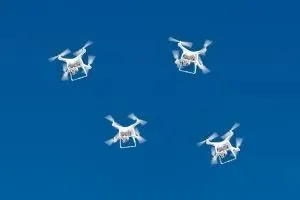
• Advanced surveying and spraying technology have also been tested at Grand Farm, including drones that cover 45 acres/hour, with a 10-minute flight time per battery load and 18.5-gallon tanks, spraying the fields with accuracy and efficiency. Tests demonstrated that spray efficiency doubled in a year.
A key factor behind these technologies is reliable parts and battery-operated products that can capture and protect data even in harsh conditions, so farmers can make real-time decisions while also planning for the future.
Preparing for the next generation
Globally, farmers tend to be in their late 50s on average, with many regions reporting typical ages of 55 to 60, according to the World Economic Forum. The growth and investment in ag-tech are creating opportunities and opening more doors to recruit younger generations into agricultural careers and on-farm jobs. It’s an exciting time to work alongside technology suppliers creating solutions that reduce risk, automate processes, optimise resources and help farms become more adaptive under uncertain conditions.
No matter the size of farm or ranch, agriculture remains rooted in connection to the land, family and community. Networking and engaging with fellow agriculturalists and valued partners to maintain and consistently improve a farm or ranch is how farmers build and pass on those resources to the next generation. Agriculture is rooted in people. Technology is also rooted in people, and the different voices coming together are creating a revolution of momentum, excitement and optimism for the future despite complex challenges.
Doing more with less
As the global population continues to grow and faces land infrastructure stress and climate change, there is increasing pressure and concern about producing enough food.
Therefore, smarter, more efficient solutions are constantly being tested across connected farm environments.
Power electronics will need to be robust to survive outdoor, rugged field environments, and sensor data will be critical to build smarter, resilient operations.
Together, farmers, engineers, technology suppliers, distributors are co-creating a connected eco-system of equipment, sensors, software and machines that are enabling farmers to do more with less – an approach that four generations of my family are carefully watching unfold while finding ways to implement on our family farm. Traditional farm knowledge and expertise, coupled with innovative technology, is not only a different path forward, but a smarter one for the future of agriculture
 Katie Pinke is a manager of supplier marketing at DigiKey.