

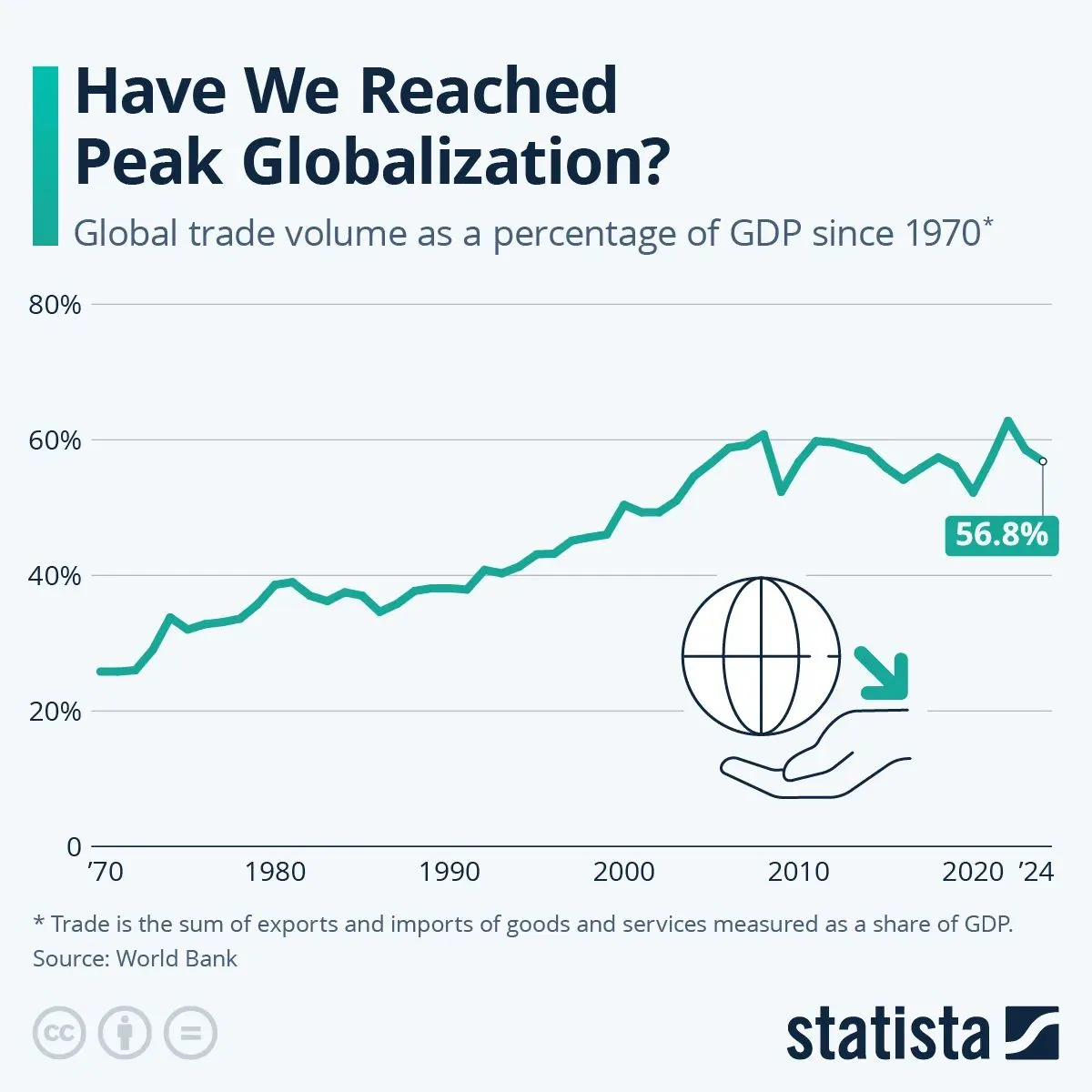
In 2020, global trade, measured as a share of global GDP, dropped to its lowest level since 2003 in 2020.
in 2022 the trade-to-GDP ratio peaked at 62.8% before dropping back to 56.8% in 2024, says the World Bank.
Since then, a renewed U.S. trade war, escalating geopolitical tensions and armed conflicts, including in the Middle East, have further disrupted global trade flows.
With economic blocs hardening and nationalistic voices gaining strength in many parts of the world, we may well have seen the peak of globalisation.
The uncertainty surrounding future trade policy and conflict escalation could result in companies re-thinking their supply chains in an attempt to make them less vulnerable to global trade disruptions.
As it takes time to re-configure global supply chains, it remains unclear how lasting the current shift toward fragmentation will be for global trade in the long term.


EU and Merkel put the coup de gras on world trade by erecting onerous tariff barriers plus high tariffs on USA imports an then refusing President Trump’s offer of a free trade deal. Merkel spurned American energy and imported oil & gas from NATO enemy, Russia. EU refused to contribute to NATO while trading with the enemy.