
US President Donald Trump is in a hurry. Four months into his second term, he is enacting policies with a bumptious bravado that has startled everyone outside his MAGA movement.
Greenland
Among the more contentious is his acquisitive gaze towards Greenland, the world’s largest island, an autonomous territory within the Danish kingdom, and a trove of natural resources including rare earth elements (REEs). Though he stated his ambitions with a smirk during March’s Joint Address to Congress, Trump ain’t trolling.
“We need Greenland for national security and even international security, and we’re working with everybody involved to try and get it,” he said. “But we need it, really, for international world security. And I think we’re going to get it. One way or the other, we’re going to get it.”
Trump must play a longish game – suggestions the US could take Greenland by force are, one administration official asserted, “total BS”. Rather, he wants to compress his desired outcome into “less than a decade”. Greenland has things he believes the US needs sooner.
Washington has long coveted Greenland though the reasons change. Today, three stand out.
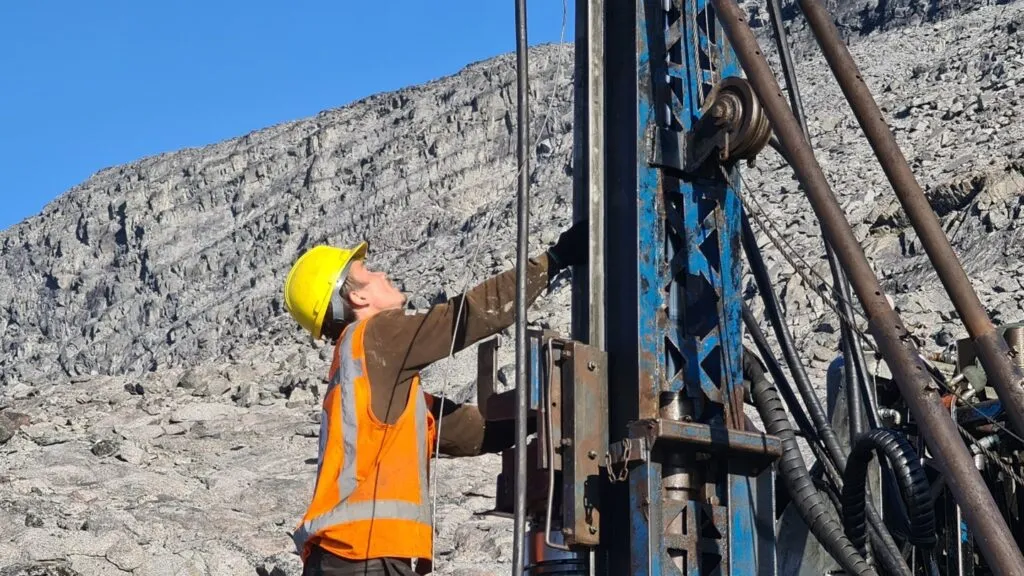
For electronics, it is a large untapped source of the REEs used in magnets and components covering a range of end-products from smartphones to electric vehicles (EVs).
That is in addition to Greenland’s location beside the Northeast passage (aka Northern Sea route) is becoming more easily navigable by Russia and China as Arctic ice recedes (a US Space Force base at Pituffik operates along the route) and its potential as a source of offshore oil (7.3bn barrels) and natural gas (51.8tr cubic feet).
Beijing just introduced licensing (effectively a US ban) on domestic REE exports in response to Trump’s trade tariffs. China mines 69% of intermediate rare earth oxides (REO) and refines 90% of REEs, according to GlobalData. This translates into a 90% share of REE-based magnet manufacturing.
MP Materials reopened the only active US REE mine at Mountain Pass, California in 2017, adding a refining operation and, more recently, a neodymium-iron-boron (NdFeB) magnet factory in Fort Worth, Texas. General Motors (GM) is its main customer. While it is ramping annual magnet output to 1,000t, GM’s annual demand is 7,000t. One customer. One use case.
REE-rich
Greenland has three known REE-rich deposits: Tanbreez, Kvanefjeld and Sarfartoq. Tanbreez is the most immediately viable.
Licensee Critical Metals published an economic assessment in March, previewing annual REO output of 85,000t, scalable to 425,000t; Mountain Pass’ 2024 REO output was 45,455t.
Tanbreez is rich in ‘heavy’ as opposed to ‘light’ REEs (a distinction mainly based on atomic number). Light REEs such as neodymium and praseodymium are used in EVs, but two heavy REEs – dysprosium (smartphones) and terbium (LED displays) – are also supply bottlenecks.
Of the other sites, Sarfartoq requires further exploration, while Kvanefjeld contains significant uranium and Greenland’s Parliament has therefore banned exploitation.
As author Tim Marshall (Prisoners of Geography) has said, Trump is “looking at tomorrow’s map”. But he is already charting mis-steps.
Denmark is furious over US claims that it “hasn’t done a good job at keeping Greenland safe.” Vice President J.D. Vance’s outreach visit was curtailed amid protests in Nuuk, the capital, with 85% of the population opposing joining the US.
Greenland’s newly elected Prime Minister, Jens-Frederik Nielsen, captured the mood: “President Trump says that the United States is getting Greenland. Let me be clear: the United States won’t get that. We do not belong to anyone else. We determine our own future.”
But Trump aims to jolly things along. Forced occupation is not his endgame. Rather, the most practical course looks a bit of a slog. Trump wants to encourage a ‘quickie’ divorce. Greenland’s recent election saw pro-independence parties receive 90.7% of the vote, but only one, Naleraq (24.5%), favours the fast track.
Even if Greenland tabled independence today, it would need to formalise voting procedures, conduct the referendum, draft a constitution and agree terms of separation. Constitutional experts estimate this would take at least three years, probably more. Only then could a sovereign Greenland negotiate a semi-autonomous partnership with, or membership of, the US, much as the UK had to complete Brexit before striking trade deals.
More years
Nor would the US be sole suitor. The EU and Greenland signed a raw materials memorandum in 2023 for co-investment in exploration, environmental safeguarding, and value-chain co-operation. Brussels could counter-offer membership or a COFA (Compacts of Free Association)-like arrangement.
Meanwhile, the US can expand its footprint and influence through existing channels (its Nuuk consulate, the Pituffik base), and fund infrastructure. It can offer economic aid.
Five years is mightily ambitious; seven is more realistic; and 10 cannot be discounted. Meanwhile, President Trump isn’t known for his patience. The Chinese REE ban is further testing it. He may have to concede something else. In which case, Nuuk holds all the cards.
Paul Dempsey is a US-based technology journalist.