Reserved capital increase
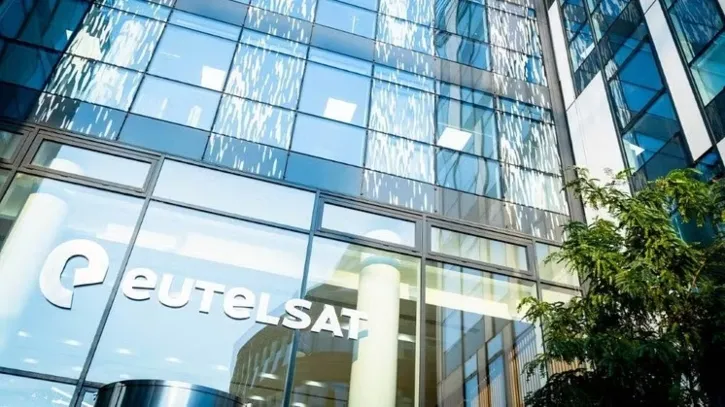
The funding approach, via a reserved capital increase, has been formally agreed by the company’s board. It is for two main reasons, according to Eutelsat.
First, supporting investment in developing its existing OneWeb Low Earth Orbit (LEO) constellation, of around 600 satellites. And second, helping to fund the European Union’s future IRIS² constellation.
At a price per share of €4.00, the French state will subscribe for €551m. Bharti Space Limited for €30m, the UK government for €90m, CMA CGM Participations for €100m, and FSP for €57m.
Equity raise
Following this change the stake holdings will be as follows. The French state will hold 29.65% of the share capital and voting rights of the company. Bharti Space, the UK government, CMA CGM Participations and FSP will respectively hold 17.88%, 10.89%, 7.46% and 4.99% of the capital and voting rights.
The company says its target for the medium-term is three times net debt to EBITDA.
It expects its LEO revenues to be “significantly outperforming the market” by the end of the financial year 2028-29. Eutelsat describes space as “a key sovereign strategic asset”.
Resilience
The UK government agreed to participate in the company’s capital boost back in July, we reported.
“As our adversaries increasingly use space technologies to harm us, resilient satellite connectivity has become essential to our continent’s national security,” said Peter Kyle at the time, as the UK’s Secretary of State for Science, Innovation and Technology.
“This investment reflects our commitment to support the development of these critical technologies and maintain an important stake in the global satellite communications sector.”
OneWeb Eutelsat
The UK government previously had an almost 20% stake in OneWeb, which was finally acquired by Eutelsat in November 2022. Under the terms of the merger, the UK government retains rights over procurement. It also decides the location of the company HQ and can veto customers on grounds of national security.
Before that, OneWeb was bought out of bankruptcy by the British government and India’s Bharti Global.