
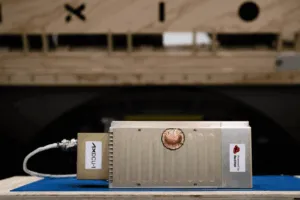
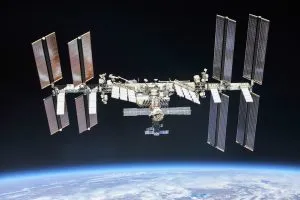
The company’s 4K camera system is called “SpaceTV-1” and is hosted on the International Space Station. It is on the ArgUS plate attached to the Bartolomeo platform, operated by Airbus and located on the European Space Agency’s Columbus module.
Sen
“We’re excited to share these amazing 4K live views of Earth,” said Charles Black, Founder and CEO of Sen. “This mission really is for all humanity and we hope our livestream will be a valuable application that empowers everyone with real-time information, and that it will inspire people.”
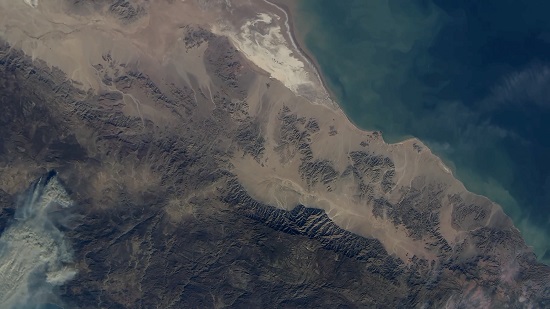
The livestream is now freely available on the company’s website, some mobile apps and YouTube.com. You can see an example below:
Sen’s payload has three camera views. One camera, with a wide angle ‘panoramic’ lens, provides views of Earth’s horizon. Another camera looks straight down at Earth and films a scene around 240 km x 180 km. Each pixel represents approximately 60m of the ground (“ground sample distance” or GSD). Finally, a third camera looks at the forward-facing docking port of the space station’s Harmony Module.
Note that Sen also has its own satellite in orbit. The Kongsberg NanoAvionics 16U nano-satellite is ETV-A1.
The company says it is working on launching further video cameras into space to increase livestreaming output in 2026 and beyond.
ISS
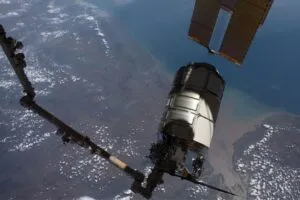
Sen cameras arrived at the International Space Station in March 2024. This was as part of the Space X-30 Commercial Resupply Mission (CRS) to the ISS.
Sen’s declared mission is “to stream real-time videos from space to billions of people, gathering news and information about Earth and space and making it universally accessible and useful”.
See also: NanoAvionics to build EarthTV satellites



Is there a list of downlink receiver stations? I understand that there is no downlink when in the middle of the Atlantic or Pacific oceans however I have noted occasional loss of link when over the south eastern portion of Australia and other times it can live stream over Tasmania and NewZealand.
Is there possibly a probability of signal overlay map somewhere?