The aim is to enable other operators and agencies to plug into the company’s global platform. One early adopter it cites is the Portuguese fiber network operator dstelecom.
LoneWhisper
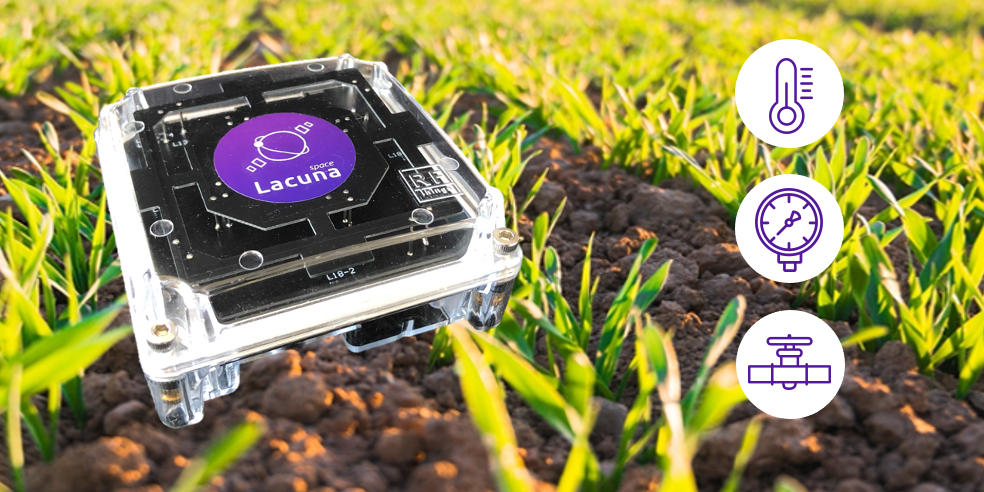
Lacuna highlights that much of the world remains beyond the reach of terrestrial networks. But sensors monitoring farms, forests, oceans and infrastructure potentially need to connect from anywhere. Satellite IoT, and especially direct-to-device connectivity, makes that possible.
“This is how we accelerate the next generation of D2D services, by working together,” said Rob Spurrett, CEO of Lacuna Space. “Partners can now fly our proven LoneWhisper gateway payloads on their own satellites and instantly join an established global network for low-power IoT connectivity.”
Lacuna Space
Lacuna Space is a UK and Dutch company – headquartered at Rutherford Appleton Laboratory Harwell Campus in Didcot, pictured right – that provides low-cost global connections, for short data messages to sensors and mobile equipment. The company describes it as an ultra-low cost tracking and detection service.
The idea is for satellite coverage to fill connectivity gaps in hard-to-reach areas that are without cellular or Wi-Fi signals. Asset tracking, fleet management and data collection, globally, are seen as target applications.
It will use LR-FHSS (Long Range-Frequency Hopping Spread Spectrum) technology, which has been designed for long-range and large-scale communication scenarios such as satellite IoT.
Image: Lacuna
See also: Lacuna deploys more Oxford Space Systems helical antennas for IoT