“By moving AI compute to space, we unlock access to unlimited solar power and completely remove the energy bottleneck,” says Philip Johnston, co-founder and CEO of Starcloud, who is an alumnus of Imperial College.
Investors were: Benchmark, EQT Ventures, Macquarie Capital, NFX, Nebular, Y Combinator, Adjacent, 776 Ventures, Fuse Ventures, Manhattan West and Monolith Power Systems.
Angel investors included Gen Stephen Wilson, former Boeing CEO Dennis Muilenburg and former Starbucks CEO and Goldman Sachs board member Kevin Johnson.
Originally called Lumen Orbit, the company renamed itself Starcloud in 2005.
The company raised $3m in pre-seed funding, joined Y Combinator, raised $34m in 2005 and launched a 60kg satellite called Starcloud-1 (pictured) in November 2005.
Starcloud now plans to put 88,000 datacentre satellites into low earth orbit.
“The AI revolution is colliding with the physical limits of our terrestrial energy grid, we are quickly running out of places to build new energy projects for datacentres on Earth,” adds Johnston. “By moving AI compute to space, we unlock access to unlimited solar power and completely remove the energy bottleneck. This funding allows us to rapidly scale our orbital infrastructure and meet the massive commercial demand for sustainable AI compute.”
The new capital will accelerate the design and build of the company’s Starcloud-3 satellites, the establishment of a dedicated manufacturing facility, critical headcount expansion and the procurement of future launch contracts.
Starcloud builds its spacecraft in-house – Johnston says it has to, “because the cost equation is brutal”. It is setting up production lines at a facility in Woodinville for the bigger Starcloud-3 satellites, and has already welded up the chassis for one.
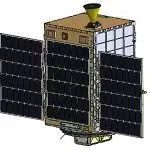 Later this year the company will launch Starcloud-2. This satellite will feature the largest commercial deployable radiator ever sent to space and generate 100-times the power generation of Starcloud-1, which carried an Nvidia H100 chip.
Starcloud-2 will be the company’s first satellite to run commercial edge and cloud workloads for customers, including early customer Crusoe, alongside partnerships with AWS, Google Cloud and Nvidia.
“We believe that we are in the early innings of a decades-long buildout of AI infrastructure,” says Benchmark general partner Chetan Puttagunta who is on the board of Starcloud. “Starcloud is pioneering a solution to the challenges of scaling AI infrastructure on Earth with orbital datacentres. Their extraordinary engineering team has achieved significant technical breakthroughs in power and cooling, as well as innovative advancements in manufacturing processes while remaining exceptionally capital efficient. We believe their technical rigour and remarkable ambitions will enable them to achieve extraordinary scale.”
Apart from Starcloud there are four other companies specialising in putting datacentres in space: Axiom Space, Sophia Space, Madari Space and Aetherflux.
In addition, diversified companies planning to put datacentres in space include Google, Tesla and Amazon.
For more information, visit www.starcloud.com.