
TFLN is an optical interconnect material which enables faster data transmission and better power efficiency while generating less heat than silicon photonics.
While silicon photonics is more mainstream with the advantages of established ecosystem, cost and digital co‑integration.and is being pursued by TSMC and Nvidia, TFLN offers better modulators and nonlinear optics.
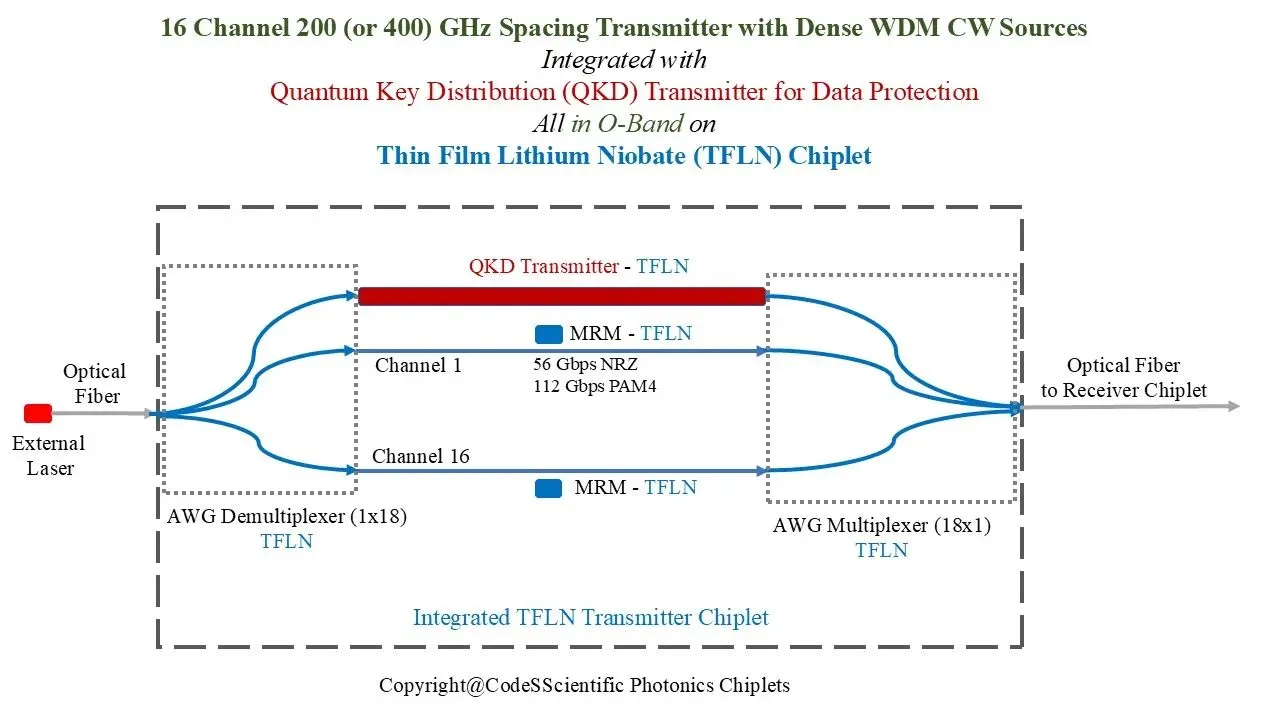
A research direction being explored is TFLN‑on‑Si rather than pure substitution.
UMC svp G.C. Hung told the Nikkei: “We already have many customers coming to us from AI datacentre segments to use this new material for their photonics and next-generation optical communication solutions.” He added that TFLN can achieve 1Tbps+ bandwidth.
Hyperlight’s site states: “Our proprietary, patented, TFLN Chiplet platform redefines optical performance by uniquely combining the superior optical characteristics of TFLN with scalable CMOS-like fabrication techniques. This innovative approach delivers unprecedented bandwidth and energy efficiency, powering critical technologies across AI, data centers, telecommunications, quantum computing, and emerging applications.”