Baillie Gifford, Balderton Capital. the British Business Bank, Eclipse Ventures, Microsoft, Nvidia, Ontario Teachers Pension Fund and Uber provided $1.2bn. Uber will kick in another $300m if certain milestones are met.
In 2024 Wayve raised $1.05bn from investors including Microsoft, Nvidia and Softbank, taking its total investment since its founding in 2017 by two Cambridge PhDs, Alex Kendall and Amar Shah, to $1.3bn.
It has had backing from Mercedes, Nissan and Stellantis.
Wayve’s AI is designed as a foundation model capable of being applied to different countries, different road regulations and different vehicles with minimal additional training.
In June last year Uber and Wayve announced that they would be trialling self-driving cars in London.
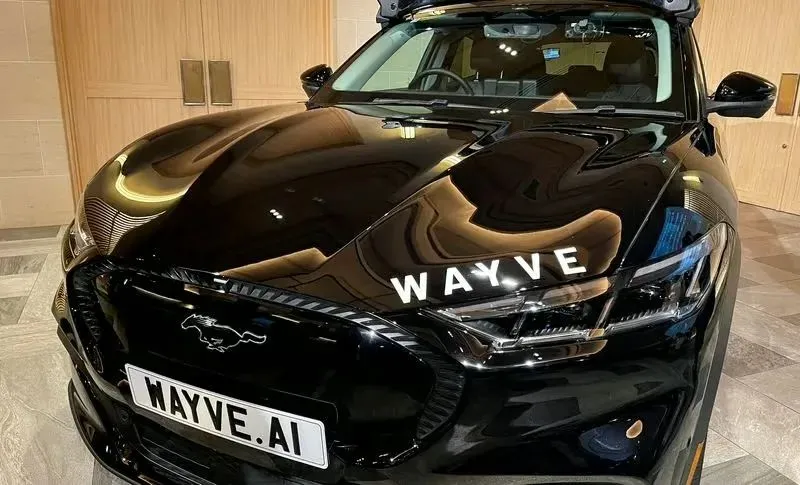
Wayve’s software enables autonomous driving without relying on rule-based software or pre-mapped routes. It has been tested in more than 500 cities across Europe, North America and Japan.
Nvidia and Wayve have a seven-year relationship. Nvidia invested in Wayve in 2024 and they collaborate on developing Wayve’s technology, which is based on Nvidia’s Drive AGX Thor technology. This is also used by China’s leading self-driving car company BYD.
Wayve’s AI software aims to get cars to understand human behaviour from real-world experience. Wayve’s technology mimics human driving through a combination of imitation learning (learning from recorded driving data), from the use of safety drivers (reinforcement learning) and from computer simulations of unusual or dangerous situations (simulation learning).