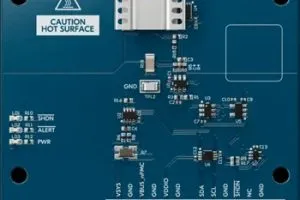
It is powered by Altium and, according to Renesas Electronics, is the first platform to bring silicon and systems together across an open ecosystem at scale.
It allows engineering teams to explore architectures, co-develop hardware and software and make system-level design decisions backed by real-time insights.
Now available for general release, Renesas 365 integrates more than 550 variants of the RA Arm-based MCU family. It provides guided recommendations based on pin usage, peripherals, timing, power and how devices align with system building blocks. It reduces the time spent reviewing datasheets and tool requirements from houts to minutes, said the company and its system-level intelligence aids design convergence, minimises downstream rework and enables faster time to market.
Renesas also offers the e²studio integrated development environment (IDE), Flexible Software Package (FSP) and smart documentation, for engineers to leverage integrated design workflows specifically created for RA MCU devices, including sensing, power management and compiler support.
Renesas 365 is an open, scalable platform and the next phase of development is already underway with the aim of delivering completed subsystem building blocks to be modeled as platform-maintained components. More Renesas product families will be supported, and the component ecosystem will include more third-party devices, confirmed the company. Subsystem components such as peripheral configuration, power management and software will be automatically defined, maintained and validated for compatibility.
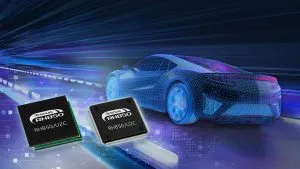
Renesas Electronics also showcased its new 32bit automotive microcontroller, the RH850/U2C (pictured). It is the low-end option of the RH850 portfolio, joining the RH850/U2B and mid-range RH850/U2A MCUs.
It combines four RH850 CPU cores operating at up to 320MHz (including two lockstep cores), with up to 8MB of on-chip flash memory. Developers currently using RH850/P1x or RH850/F1x devices can transition to the RH850/U2C to meet the requirements of the latest E/E architectures, said Renesas.
To this end, it operates with E/E architecture interfaces, such as Ethernet 10base-T1S , Ethernet TSN, CAN-XL, and I3C and is compatible with CAN-FD, LIN, UART, CXPI, I²C, I²S, and PSI5 interfaces.
It also supports functional safety up to ASIL D, conforming to ISO 26262 and complies with the latest ISO/SAE 21434 standard for cybersecurity and supports cryptographic algorithms from post-quantum cryptography (PQC) to current Chinese and other international regulations. Its dedicated hardware accelerators provide high throughput by offloading cryptographic processing and reducing CPU load.
Embedded World 2026: https://www.electronicsweekly.com/news/embedded-world-2026-get-the-full-electronics-weekly-guide-2026-03/