 Designing an embedded system with Raspberry Pi technology often begins with a deceptively simple question: “Can I just use a standard Raspberry Pi?” The answer, as with all great engineering dilemmas, is: “It depends.”
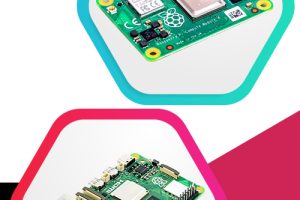
The Raspberry Pi platform has grown beyond its original educational mission into a key player in the embedded and industrial computing space. Two primary hardware families have emerged to serve different needs: the fully integrated single board computers (SBCs), such as the Raspberry Pi Model B series, and the flexible yet more demanding compute modules (CMs). While both share the same processing core, the journey from idea to product diverges quickly based on system requirements, environmental constraints and reliability expectations.
When the SBC is just right
The Raspberry Pi SBC – say a Raspberry Pi 4 Model B – is an excellent place to start. It comes with everything needed to boot up and run software: USB ports, Ethernet, HDMI, GPIO headers and integrated wireless. The SBC includes a power supply stage that can be plugged into a regulated 5V supply via USB-C or the GPIO header. No external DC-DC converters are needed.
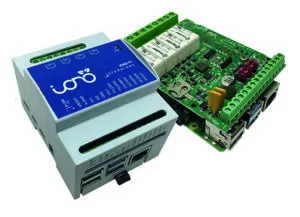
Figure 1: Sfera Labs’ Iono Pi industrial PLC based on Raspberry Pi SBC
A local dashboard controller that needs to display sensor data over HDMI accepts basic inputs through USB and push logs to a network share can run happily for years on a stock Pi in a simple enclosure. The GPIO header gives access to low-speed control lines, and the ecosystem of HATs (add-ons) and breakouts makes interfacing with hardware trivial.
In scenarios such as these the simplicity of the SBC is not a limitation, it’s an advantage. There is no need for a custom carrier board, external regulators or boot configuration tricks. Prototyping can be on the same hardware that will be eventually deployed, dramatically reducing time to market, and engineering and manufacturing overheads.
It is not as sleek or compact as a CM, but when the device is going to be put in a control cabinet, behind a kiosk, or under a desk, that hardly matters.
Tackling add-ons
A team deployed a monitoring system built around a Raspberry Pi SBC in an industrial setting. Functionally it was perfect, but after a few weeks SD card corruption and mysterious system freezes began to appear. The culprit? Electromagnetic noise was wreaking havoc on the power supply.
The standard USB-C supply was not designed for noisy 12V rails or inductive loads. The solution was a simple add-on board, the Strato Pi Mini, that accepted 12V input via screw terminals, and added surge protection, shielding and voltage stabilisation. There was no need to change the core hardware, rewrite software, or incur the upfront costs of moving to a custom platform.
Add-on boards can also extend the SBC’s capabilities well beyond its native feature set. The Iono Pi, for example, turns a Raspberry Pi Model B into an industrial-grade PLC by stacking an expansion board that adds protected digital and analogue I/O, power relays and a robust power input stage (Figure 1). The boards simply snap together without the need to design a new PCB, so it gives no mechanical integration headaches.
The limits of the SBC
Eventually SBC design limitations surface that cannot be fixed with add-ons. Chief among them is storage. The microSD card is great for prototyping, but is the Achilles’ heel of mission-critical applications. Even industrial-grade SD cards, designed with high write endurance and improved reliability, are still physically removable and fragile in high-vibration environments.
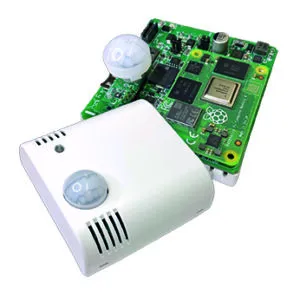
Figure 2: Sfera Labs’ Exo Sense Pi multi-sensor platform
This is where the CM earns its place. The CM4, for example, offers eMMC variants with reliable, soldered-on storage. Eliminating the SD card reduces points of failure and improves system robustness. It also enables tighter integration in terms of boot control and secure provisioning.
The move to the CM requires a suitable carrier board and unlike with the SBC, the entire power supply stage must be implemented externally. At first glance this adds complexity and BoM cost, but it offers a key opportunity.
By designing the power supply stage or choosing a carrier that includes one, allows much stricter electrical and environmental requirements to be met. This means supporting wide input voltage ranges, adding surge and EMC protection, implementing power monitoring and ensuring reliable cold-start behaviour. This stage is often critical in moving from a functional prototype to a robust, field-deployable system.
Customisation builds reliability
In more demanding scenarios even onboard eMMC isn’t enough. What if redundancy or field-upgradeable storage is needed? Or the ability to switch boot sources programmatically in response to errors?
Some products implement dual SD card architecture. Two SD cards are connected to the CM’s primary (where the CM boots from) and secondary (for auxiliary storage) SD buses through a logic-controlled switching matrix. This setup enables automatic or software-driven failover from one card to the other, separation of OS and data, or complete image duplication.
A more advanced configuration introduces a power-controlled SSD. It is possible to boot from SSD for performance, while keeping an emergency fallback on eMMC or SD. With proper power gating and boot sequence control, the system can run, recover and reimage itself.
CM-based systems can replace fixed USB ports with power-controlled USB interfaces with fault detection routed to GPIOs. The Raspberry Pi can reboot a frozen LTE dongle or isolate a misbehaving device, all without physical access.
This means rather than avoiding failure, it is possible to engineer around it.
Beyond robustness and redundancy, the CM allows for extreme mechanical customisation. In applications where size, shape, or aesthetics matter, the SBC simply does not fit. The CM’s reduced footprint and flexible I/O routing make it suitable for edge devices, sensors and modular systems.
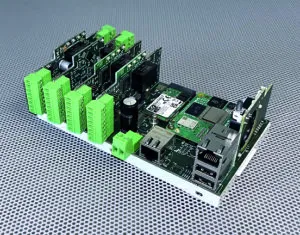
Figure 3: A modular design, such as the Strato Pi Max, is built around the Raspberry Pi CM and allows the user to select from a range of expansion boards
In a custom deployment for retail, a CM was embedded into a time-of-flight sensor for people counting, mounted inside tight mechanical enclosures on existing security gates. Powered by a minimalist carrier board the CM’s size allowed it to fit perfectly without altering the physical infrastructure.
Whether it’s wall-mounted, rail-mounted, or invisibly embedded, the CM format gives designers the freedom to shape the system to the space, not the other way around. Figure 2 shows the Exo Sense Pi multi-sensor platform, with environmental sensors, audio and motion detection, wireless connectivity and I/O, based on CM4.
Choosing between a Raspberry Pi SBC and a CM is not about features alone. SBCs are inexpensive, well-supported and include everything needed to get started quickly, including power regulation. With thoughtful add-ons they can even stretch into surprisingly rugged territory.
Once storage reliability, USB control, compact form factor, or deep integration requirements come into play, the CM shines. It’s a more complex path, but it is more powerful. Engineers can write their own rulebook, define I/O and even build recovery logic into the hardware.
One question to ask is not what is needed today, but what will it need to do automatically the day it fails. Sometimes the difference between an SBC and a CM is the difference between a field call and a field-tested solution.